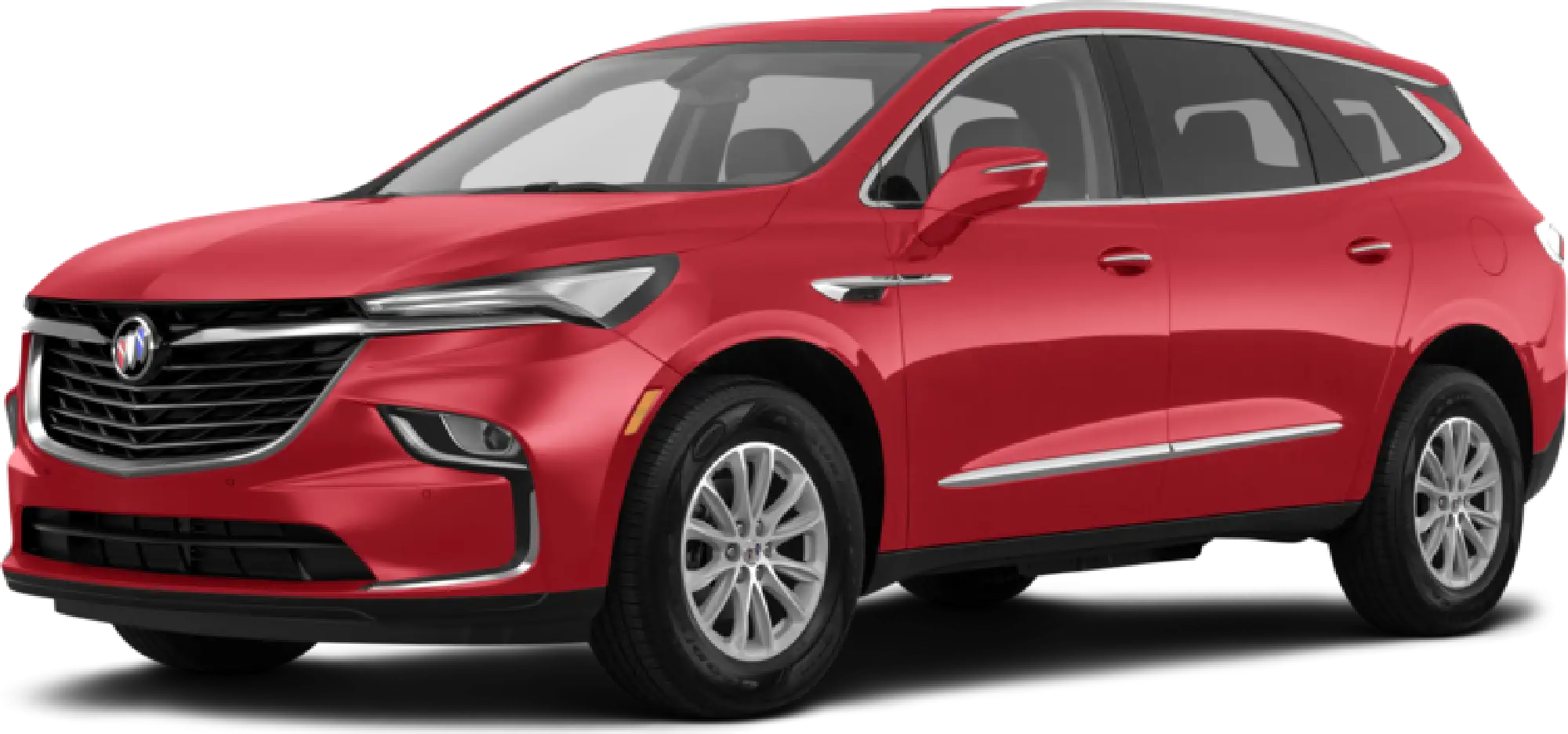
Best Buick for Towing: Enclave Towing Capacity and Trailer Setup Guide
Buick may not be the first brand that comes to mind when shopping for a tow vehicle, but the Enclave offers a compelling combination of three-row comfort, everyday practicality, and useful trailer-hauling capability.
For families who occasionally tow a small camper, fishing boat, utility trailer, or recreational equipment, this midsize SUV provides an alternative to larger, truck-based vehicles.
Understanding Buick Enclave towing capacity is essential before attaching a trailer, particularly because maximum ratings depend on model year, equipment, and factory-approved towing configurations. Buyers wondering whether a Buick can tow should look beyond the advertised maximum and consider payload, trailer tongue weight, hitch equipment, and how the vehicle performs when fully loaded.
This guide examines the Enclave’s towing capabilities, trailer setup requirements, maintenance considerations, and potential ownership expenses to help drivers determine whether Buick’s largest SUV fits their towing needs.
Among Buick’s current SUV lineup, the Enclave is the strongest choice for drivers who need meaningful towing capability. Its larger platform, substantial wheelbase, and available trailering equipment distinguish it from smaller Buick crossovers designed primarily for commuting and passenger transportation.
Properly equipped recent Enclave models can tow up to 5,000 pounds, making them suitable for many lightweight recreational trailers. This capacity allows owners to transport equipment that would exceed the towing limits of smaller SUVs, provided the trailer’s loaded weight and the vehicle’s other ratings remain within manufacturer specifications.
The Enclave has also undergone significant mechanical changes over its production history. Earlier generations relied on naturally aspirated V6 engines, while the redesigned 2025 model introduced a turbocharged four-cylinder powertrain paired with an eight-speed automatic transmission.
These differences influence towing performance, engine characteristics, and the equipment owners should verify before purchasing a trailer.
| Buick Enclave Model Years | Engine | Horsepower | Maximum Towing Capacity |
|---|---|---|---|
| 2018–2024 | 3.6L V6 | 310 hp | Up to 5,000 lbs |
| 2025–2026 | 2.5L Turbocharged 4-Cylinder | 328 hp | Up to 5,000 lbs |
Maximum ratings apply only to appropriately equipped vehicles. Some configurations have substantially lower towing limits, and owners should verify the exact rating in their model-year owner’s manual.
The Enclave’s 5,000-pound maximum places it in a useful category for occasional recreational towing. It does not make the SUV a substitute for a heavy-duty pickup, but it provides sufficient capability for many families who want one vehicle for commuting, road trips, and weekend adventures.
One of the most common questions among Buick shoppers is whether the Enclave can safely handle recreational trailers. The answer depends on the trailer’s fully loaded weight, the vehicle’s equipment, and how much additional cargo and passenger weight the SUV carries.
A trailer’s advertised dry weight is only a starting point. Water, propane, batteries, camping supplies, fishing equipment, and other accessories can increase the actual towing weight considerably.
The following examples illustrate common trailer categories and their approximate loaded weights.
| Trailer Type | Typical Loaded Weight | Enclave Suitability |
|---|---|---|
| Small Utility Trailer | 1,000–2,500 lbs | Generally Suitable |
| Lightweight Pop-Up Camper | 1,500–3,500 lbs | Generally Suitable |
| Small Fishing Boat and Trailer | 2,000–4,000 lbs | Suitable With Proper Equipment |
| Lightweight Travel Trailer | 3,000–5,000 lbs | Requires Careful Weight Verification |
| Large Travel Trailer | 6,000–9,000 lbs | Exceeds Maximum Rating |
| Heavy Equipment Trailer | 5,000+ lbs | Often Exceeds Maximum Rating |
These figures are broad examples rather than manufacturer-certified trailer weights. Owners should use the trailer’s actual loaded weight and gross vehicle weight rating when evaluating compatibility.
A lightweight pop-up camper is often a particularly good match for the Enclave because it combines relatively modest weight with a lower profile. Larger travel trailers create additional challenges because their height and frontal area increase aerodynamic resistance, particularly at highway speeds.
Boat trailers present different considerations, including wet launch ramps, changing traction conditions, and the possibility of additional weight from fuel and equipment.
For owners who regularly launch boats, an all-wheel-drive Enclave may provide useful traction benefits. AWD does not increase the vehicle’s published towing capacity, however, and should not be treated as permission to exceed its weight ratings.
Engine performance plays an important role in how confidently a vehicle accelerates, climbs grades, and maintains highway speeds while towing. The Enclave’s different generations deliver their power in noticeably different ways.
The 2018–2024 Enclave uses a 3.6-liter naturally aspirated V6 producing 310 horsepower and 266 lb-ft of torque. Paired with a nine-speed automatic transmission, this engine provides smooth acceleration and familiar power delivery.
The redesigned 2025 Enclave introduced a 2.5-liter turbocharged four-cylinder engine producing 328 horsepower and 326 lb-ft of torque. Its increased torque output, available across a relatively broad engine-speed range, can be beneficial when accelerating with a trailer or maintaining speed on moderate grades.
Although the newer engine produces more torque, both generations share the same properly equipped maximum towing rating of 5,000 pounds.
Front-wheel drive and all-wheel drive also affect towing behavior. Front-wheel-drive models may provide adequate performance on dry pavement, while AWD can improve traction when accelerating on slippery surfaces or navigating gravel access roads.
Neither configuration changes the importance of proper trailer balance, braking equipment, and adherence to the vehicle’s individual weight limits.
A properly configured towing system involves considerably more than installing a receiver hitch. Safe towing requires compatible equipment, correct weight distribution, functioning trailer lighting, and appropriate braking capability.
For the Enclave, owners should first determine whether their vehicle includes the manufacturer-approved trailering package required for its higher towing rating.
Factory trailering equipment and specifications vary by model year, so an aftermarket hitch alone should never be assumed to increase the vehicle’s rated capacity.
The trailer hitch must be rated to handle the intended trailer weight and tongue load. Many trailers within the Enclave’s maximum towing range use a two-inch receiver, although the correct hitch configuration depends on the vehicle and trailer.
Owners should verify receiver ratings, hitch attachment requirements, and whether any additional equipment is specified by Buick.
Trailer wiring connects the SUV’s electrical system to the trailer’s brake lights, turn signals, and running lights. Depending on the trailer and vehicle configuration, a four-pin or seven-pin connector may be appropriate.
Trailers equipped with electric brakes generally require compatible wiring and an approved brake-control arrangement. Drivers should confirm these requirements before towing rather than assuming the vehicle includes every necessary connection.
Trailer brakes become especially important as loaded trailer weight increases. State regulations vary, and Buick’s owner manual may establish additional requirements.
Tongue weight is the downward force exerted by the trailer coupler on the hitch. Conventional bumper-pull trailers often require tongue weight around 10% to 15% of loaded trailer weight, subject to the trailer manufacturer’s instructions and the vehicle’s specific limits.
For example, a 4,000-pound trailer might place approximately 400 to 600 pounds on the hitch. That weight counts against the SUV’s available payload, reducing the amount available for passengers and luggage.
A trailer can therefore remain below the Enclave’s maximum towing rating while still causing the vehicle to exceed its payload or rear-axle weight limit.
Understanding towing limits requires examining several different vehicle ratings rather than focusing exclusively on the advertised maximum trailer weight.
Gross vehicle weight rating, or GVWR, represents the maximum allowable loaded weight of the SUV itself. Gross combined weight rating, or GCWR, represents the maximum allowable combined weight of the loaded vehicle and trailer.
Gross axle weight ratings establish limits for the front and rear axles, while payload capacity describes how much additional weight the vehicle can carry beyond its specified curb weight.
These ratings interact whenever passengers, luggage, and trailer tongue weight are added.
| Weight Rating | What It Means |
|---|---|
| Towing Capacity | Maximum Permitted Trailer Weight Under Specified Conditions |
| GVWR | Maximum Loaded Vehicle Weight |
| GCWR | Maximum Combined Vehicle and Trailer Weight |
| GAWR | Maximum Weight Allowed on Each Axle |
| Payload | Weight Available for Occupants, Cargo, and Tongue Load |
| Tongue Weight | Downward Force Applied to the Trailer Hitch |
Consider an Enclave carrying four passengers, luggage, and a loaded trailer. Even when the trailer weighs less than 5,000 pounds, the combined passenger, cargo, and tongue weight may approach the SUV’s available payload limit.
Owners should consult the certification and tire-loading labels on their specific vehicle and use a certified scale when necessary to verify loaded weights.
Proper trailer loading is equally important. Excessive rearward weight distribution can contribute to trailer sway, while excessive tongue weight can overload the rear axle and affect steering or braking performance.
Towing places additional demands on the engine, transmission, cooling system, brakes, tires, and suspension. Although the Enclave is engineered to handle towing within its approved limits, frequent trailer use can accelerate wear compared with ordinary commuting.
Transmission temperature management is particularly important because towing increases the heat generated during acceleration, climbing, and repeated gear changes.
Braking systems also work harder when slowing a loaded vehicle and trailer, especially on steep grades. Properly functioning trailer brakes can reduce the load placed on the SUV’s brakes.
The following estimates illustrate possible repair and maintenance expenses associated with towing-related wear.
| Service or Repair | Approximate Cost |
|---|---|
| Transmission Fluid Service | $200–$450 |
| Brake Pads and Rotors, Per Axle | $350–$800 |
| Engine Cooling System Repair | $300–$1,200 |
| Suspension Component Replacement | $400–$1,200 |
| Trailer Wiring Diagnosis or Repair | $150–$500 |
| Turbocharger Replacement | $1,500–$3,500 |
| Major Transmission Repair | $2,000–$5,000+ |
| Transmission Replacement | $4,000–$7,000+ |
These are general repair estimates, not predictions of Enclave failure rates. Actual costs depend on the model year, repair complexity, parts availability, and local labor rates.
Owners who frequently tow should recognize that towing-related wear, improper operation, and damage caused by overloading may be excluded from vehicle protection contracts. Extended warranty coverage generally does not replace routine maintenance or protect against every consequence of trailer use.
Regular maintenance becomes increasingly important when an SUV is used to transport trailers, particularly during summer travel or mountainous driving.
Before towing, owners should inspect engine oil and coolant levels, confirm tire pressures, and check the condition of the hitch, safety chains, electrical connections, and trailer brakes.
Transmission servicing should follow the manufacturer’s maintenance schedule, including any severe-service provisions applicable to trailer towing. Fluid specifications and service intervals vary by model year, making the owner’s manual the most reliable reference.
Drivers should also avoid overloading the trailer and maintain appropriate speeds, especially on long grades. Selecting a suitable transmission mode or lower gear when recommended can help manage vehicle speed and reduce excessive brake use during descents.
Tire condition deserves particular attention because towing increases the load carried by the vehicle. Both the Enclave and trailer should have properly rated tires inflated according to their respective manufacturer specifications.
Owners should also monitor unusual engine temperatures, transmission behavior, braking vibration, and suspension noises after extended towing trips.
A Technical Service Bulletin, or TSB, is a manufacturer-issued document that provides technicians with diagnostic guidance, repair procedures, or information about specific vehicle conditions. TSBs are not the same as safety recalls and do not automatically mean repairs are covered at no cost.
Enclave owners can research manufacturer communications and safety recalls through the National Highway Traffic Safety Administration. Searching by model year or vehicle identification number can help identify relevant service information before a long towing trip.
The Buick Enclave can be a capable recreational tow vehicle when used within its published limits and equipped with the required trailering hardware. Its comfortable cabin, available AWD, and 5,000-pound maximum towing capability make it practical for occasional family adventures.
Concerns become more significant when owners attempt to tow trailers near the vehicle’s maximum rating without accounting for passengers, cargo, tongue weight, or challenging driving conditions.
A large travel trailer that approaches 5,000 pounds when empty may exceed the Enclave’s rating after loading camping equipment, water, and supplies. Even when its weight remains legal, a tall trailer can introduce substantial aerodynamic resistance and handling challenges.
Drivers who routinely tow heavy trailers across mountainous terrain may find a body-on-frame SUV or pickup more suitable. For occasional towing of lighter equipment, the Enclave offers a reasonable balance between capability and everyday comfort.
Properly equipped recent Buick Enclave models can tow up to 5,000 pounds. Actual capacity depends on model year, configuration, and required trailering equipment, so owners should confirm the rating for their specific vehicle.
Yes, a properly equipped Buick Enclave can tow certain lightweight travel trailers. Buyers must account for the trailer’s fully loaded weight, tongue weight, vehicle payload, and any manufacturer restrictions before selecting a camper.
For the higher published towing ratings, the Enclave generally requires the appropriate manufacturer-specified trailering equipment. Installing an aftermarket hitch does not automatically provide the cooling, wiring, or other equipment needed to achieve the maximum rating.
All-wheel drive can improve traction when accelerating on wet pavement, gravel, or slippery boat ramps. It does not increase the vehicle’s maximum towing capacity or replace the need for properly functioning trailer brakes and suitable tires.
A properly equipped Enclave may be rated to tow up to 5,000 pounds, but that does not mean maximum-weight towing is ideal for every driving condition. Frequent towing near the limit increases mechanical demands, making careful weight management, proper maintenance, and attention to terrain especially important.
For families who occasionally tow boats, campers, or utility trailers, the Buick Enclave offers useful capability without requiring a full-size pickup or truck-based SUV. Its combination of passenger comfort, cargo flexibility, and available trailering equipment makes it an appealing option for drivers who need one vehicle to handle multiple responsibilities.
Long-term ownership also involves planning for mechanical expenses, especially when towing places additional demands on the powertrain and supporting systems.
Granger Warranty provides extended vehicle protection options designed to help eligible owners manage certain unexpected repair expenses after their original manufacturer warranty expires.
Coverage depends on the selected contract, and owners should review towing-related exclusions, maintenance obligations, covered components, and eligibility requirements before purchasing a plan.
For drivers planning to keep their Enclave through years of family travel and recreational towing, comparing protection options can be a practical part of the ownership budget.
Visit Granger Warranty to explore available coverage options and determine which protection plan may fit your Buick Enclave.
Stay up to date with the latest news from Granger Warranty