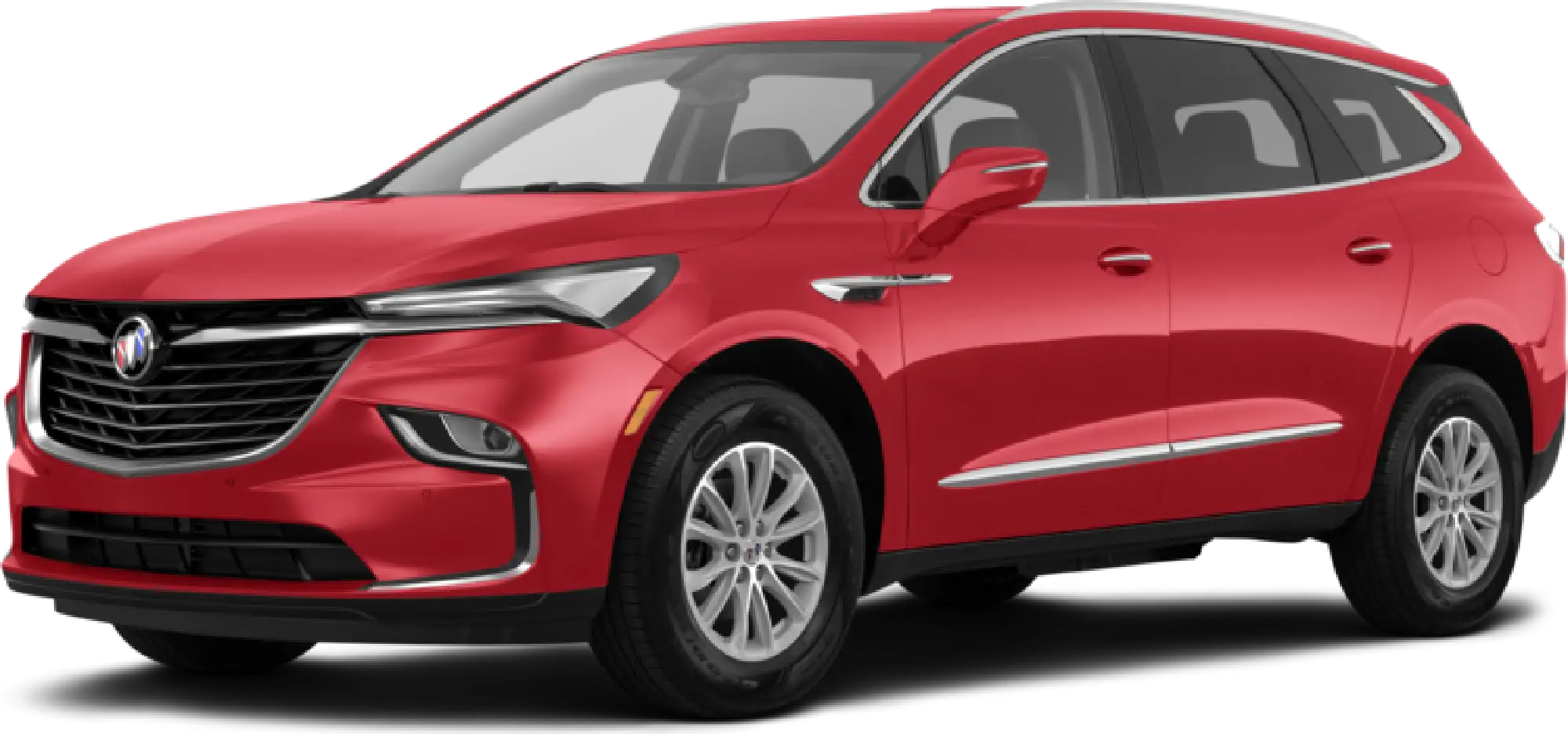
Best Buick Year for Reliability: Enclave by Model Year
Shopping for a used Buick Enclave can be a smart way to get three-row space, a quiet cabin, and upscale features without paying new-vehicle pricing.
Picking the right model year matters, though, because the Enclave’s reliability record has varied considerably across its generations.
For shoppers searching for the Most Reliable Buick Enclave Year, later examples of the second-generation SUV deserve particular attention. Available reliability and owner-complaint data point toward 2020 through 2022 as generally stronger used-vehicle candidates, with 2021 standing out as an especially appealing balance of age, depreciation, and reliability history. Consumer Reports rates both the 2020 and 2021 Enclave as more reliable than other vehicles from their respective model years, while the 2022 model earns an average reliability assessment.
No model year is automatically trouble-free. Mileage, maintenance history, previous repairs, driving conditions, and how an individual Enclave was treated can matter more than the year printed on the registration.
Buick introduced the Enclave for the 2008 model year, creating a large crossover positioned above more mainstream three-row SUVs. First-generation models ran through 2017, while a substantially redesigned second generation arrived for 2018.
That distinction is important for used buyers. Complaint data collected across model years shows substantially more reported problems among several older Enclaves, particularly the earliest examples. CarComplaints identifies 2008 as the Enclave’s worst model year and transmission failure as its worst overall complaint, while another complaint database records its highest total number of reports for 2008.
Later second-generation models generally make more sense for someone whose top priority is reliability. They also offer newer safety, infotainment, and convenience technology while still having enough years on the road to establish a meaningful ownership record.
Here is a practical overview for used Enclave shoppers:
| Model Years | Used-Buyer Outlook | Areas Worth Checking |
|---|---|---|
| 2008-2011 | Higher caution | Transmission, drivetrain, electrical and age-related repairs |
| 2012-2017 | Better than earliest models, but condition matters heavily | Engine, cooling, drivetrain, suspension and electronics |
| 2018-2019 | Early second-generation caution | Transmission behavior, climate system and electronics |
| 2020 | Generally favorable reliability history | Recall completion, powertrain and electronics |
| 2021 | Strong overall candidate | Service history, exhaust system and normal wear |
| 2022 | Strong newer used choice | Recall completion, electronics and routine maintenance |
This table should be treated as a shopping guide rather than a prediction for every vehicle. A meticulously maintained 2016 Enclave could be a better purchase than a neglected 2021.
One of the biggest mistakes buyers make is treating reliability as a single score. Real-world reliability involves the frequency of problems, severity of failures, repair cost, vehicle age, mileage, and whether problems have already been corrected.
The 2018 redesign illustrates the point. Consumer Reports currently describes the 2018 Enclave as less reliable than other vehicles from that model year, with owner reports involving areas such as minor transmission problems, climate controls, electronics, and exhaust components.
The 2019 model receives a similarly below-average assessment. Reported trouble areas include minor transmission concerns, climate-system issues, engine electrical components, and exhaust problems.
Results improve with the 2020 and 2021 Enclave. Consumer Reports rates both as more reliable than other vehicles from their respective model years, although recall history and the condition of the individual vehicle still need to be checked.
For 2022, Consumer Reports describes reliability as approximately average compared with other 2022 vehicles. Kelley Blue Book also currently classifies a comparable 2022 Enclave in the 72,000-to-84,000-mile range as having a low forecast risk of a major repair, while emphasizing that individual results vary.
For many used buyers, 2021 is one of the strongest Enclave years to put near the top of a shopping list.
It benefits from being several years removed from the 2018 redesign, and its available reliability record is favorable. Consumer Reports currently rates the 2021 model as more reliable than other vehicles from its model year.
That does not mean buyers should automatically choose a 2021 over every 2020 or 2022. Price and maintenance history can easily change the equation.
A clean 2020 with comprehensive service records may represent better value than a poorly maintained 2021. Similarly, a 2022 can be attractive to buyers willing to spend more for a newer example with fewer years of accumulated wear.
Reliability becomes especially important as an Enclave accumulates mileage because it is a relatively sophisticated three-row vehicle. Major drivetrain, climate-control, electrical, suspension, and engine repairs can become considerably more expensive than routine maintenance.
Actual repair bills depend on the model year, labor rates, location, parts availability, and whether the repair requires a complete assembly or a smaller component. Diagnostic charges can also add to the bill before any parts are replaced.
Typical budgeting ranges for a used three-row crossover like the Enclave may look roughly like this:
| Service or Repair Category | Approximate Cost Range |
|---|---|
| Professional diagnostic inspection | $100-$250+ |
| Battery replacement | $200-$450+ |
| Brake service | $300-$1,000+ |
| Alternator replacement | $600-$1,200+ |
| Air-conditioning repair | $300-$2,000+ |
| Cooling-system repair | $300-$1,500+ |
| Major transmission repair or replacement | $3,000-$7,000+ |
| Major engine repair or replacement | $4,000-$10,000+ |
These figures are broad planning estimates rather than quotes. A Buick or GM service department can provide a more accurate estimate based on the VIN, diagnosis, local labor rate, and required parts.
This is also why a pre-purchase inspection can be money well spent. Paying a qualified technician to inspect a used Enclave before purchase can uncover fluid leaks, abnormal transmission behavior, worn suspension components, stored diagnostic codes, brake wear, and evidence of deferred maintenance.
Buying a historically strong model year is only part of the reliability equation. Maintenance after purchase has a major influence on how well an Enclave performs at higher mileage.
Start by following the maintenance information for the exact model year rather than relying on a generic schedule. Buick recommends consulting the vehicle’s Owner’s Manual for vehicle-specific requirements and provides an online Buick maintenance schedule covering routine inspections, fluid changes, and other scheduled services.
Oil changes deserve particular attention. Modern engines depend on clean oil not only for lubrication but also for components that rely on controlled oil pressure and precise operation.
Transmission behavior should also be monitored. Hesitation, harsh engagement, shuddering, slipping, or unusual noises should be investigated rather than ignored, particularly when evaluating a used Enclave.
Cooling-system maintenance matters as the vehicle ages. A small coolant leak or failing component can become a much more expensive problem if overheating occurs.
Tires should also be kept properly inflated and replaced as appropriate, especially on all-wheel-drive models. Matching tire size and maintaining similar tread depths helps the drivetrain operate as intended.
Finally, keep service documentation. A folder containing receipts and maintenance records gives future technicians useful information and can make the vehicle more attractive when it is eventually sold.
A Technical Service Bulletin, or TSB, is information issued by a vehicle manufacturer to help technicians diagnose or repair a known condition. A TSB is not automatically a recall, and the existence of a bulletin does not mean every vehicle of that model year will experience the problem.
Used buyers can search for applicable manufacturer communications, recalls, investigations, and complaints through the NHTSA vehicle database. Entering the vehicle’s VIN is especially useful when checking whether applicable safety recalls remain incomplete.
TSBs can also help when evaluating an unexplained symptom. Rather than assuming a warning light, vibration, noise, or shifting characteristic requires a major component replacement, a technician can determine whether manufacturer guidance exists for diagnosing the condition.
Concern is reasonable, but avoiding the Enclave entirely is difficult to justify based solely on reliability history. The smarter approach is to separate the model years and evaluate each individual vehicle carefully.
Early first-generation Enclaves deserve greater scrutiny, especially as these vehicles are now old enough for normal age-related deterioration to compound their historical trouble areas. Complaint databases show the 2008 Enclave carrying particularly high complaint volume compared with later models.
Early second-generation models also deserve careful inspection. The 2018 and 2019 Enclave have less favorable Consumer Reports reliability assessments than the 2020 and 2021 models.
That makes 2020, 2021, and 2022 sensible starting points for reliability-focused shoppers, with 2021 particularly compelling based on currently available reliability information.
A buyer should still verify the VIN, check recall completion, obtain service records, inspect the vehicle, and complete an extended test drive. Reliability statistics can narrow the search, but they cannot tell you how one particular Enclave has been maintained.
The 2021 Buick Enclave is one of the strongest years to consider based on available reliability data, with Consumer Reports rating it more reliable than other vehicles from the same model year. The 2020 model also receives a favorable reliability assessment, making both worthwhile used-SUV candidates.
Available Consumer Reports data rates the 2022 Enclave at about average reliability for its model year. Its newer age can still make it attractive because a well-maintained example may have experienced less accumulated wear than an older SUV.
Early first-generation Enclaves deserve especially careful evaluation, with complaint data identifying 2008 as a particularly problematic year. The 2018 and 2019 models should also receive a thorough inspection because their current Consumer Reports reliability assessments are less favorable than those of 2020 and 2021.
There is no guaranteed lifespan for an Enclave. Maintenance quality, driving environment, repair history, mileage patterns, and previous ownership all influence longevity, so a documented maintenance history is more useful than relying on a universal mileage target.
Yes. A pre-purchase inspection can identify leaks, worn brakes or suspension parts, unusual transmission behavior, diagnostic trouble codes, and signs of previous repairs before money changes hands.
Choosing a reliable Enclave model year can reduce ownership risk, but it cannot eliminate the possibility of an expensive mechanical or electrical repair. Modern SUVs combine powertrain components with climate systems, cameras, sensors, infotainment hardware, electronic modules, and other equipment that can become costly as the vehicle ages.
For owners who qualify for extended coverage, Granger Warranty provides an option for managing unexpected repair exposure after applicable original coverage ends. Shoppers can review available plans and pricing through Granger Warranty and compare the coverage terms with their expected ownership period.
The best used Enclave is ultimately not determined by model year alone. Start with a strong year such as 2020, 2021, or 2022, verify its history, have it inspected, maintain it properly, and consider how an unexpected four-figure repair would fit into your ownership budget.
Stay up to date with the latest news from Granger Warranty