Best Cadillac CT4-V for Performance-Minded Driver
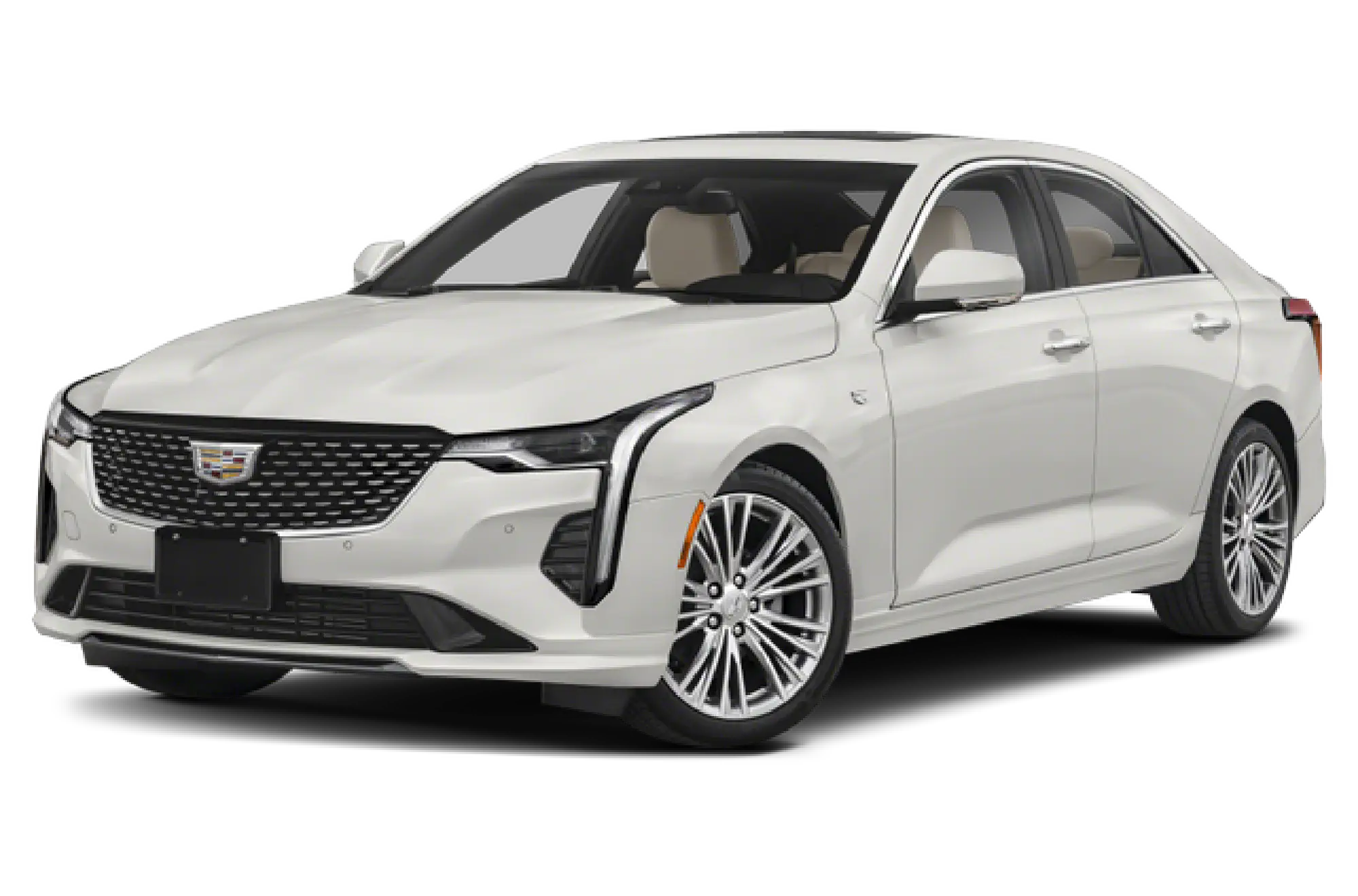
Cadillac’s CT4-V occupies an increasingly rare corner of the luxury-car market: a compact, rear-wheel-drive-based sport sedan engineered for drivers who genuinely care about steering feel, chassis balance, acceleration, and braking performance. It offers significantly more personality than a conventional luxury commuter without forcing every buyer into full track-car territory.
For 2026, Cadillac essentially gives performance-minded shoppers two choices. The standard CT4-V uses a turbocharged four-cylinder engine and is available with rear-wheel drive or all-wheel drive, while the CT4-V Blackwing steps up to a twin-turbocharged V6, rear-wheel drive, and an available manual transmission.
Choosing between them is less about identifying which car is faster. Blackwing wins that contest easily. A better question is how much performance you will actually use and how much additional operating expense you are willing to accept.
For most enthusiastic drivers who primarily use their Cadillac on public roads, the regular CT4-V is arguably the sweet spot. Buyers looking for the most engaging CT4 possible should put the Blackwing at the top of the list.
| 2026 Specification | Cadillac CT4-V | Cadillac CT4-V Blackwing |
|---|---|---|
| Engine | 2.7L Turbo I4 | 3.6L Twin-Turbo V6 |
| Horsepower | 325 hp | 472 hp |
| Torque | 380 lb-ft | 445 lb-ft |
| Transmission | 10-Speed Automatic | 6-Speed Manual or 10-Speed Automatic |
| Drivetrain | RWD or Available AWD | RWD |
| Cadillac-Estimated 0-60 MPH | 4.8 Seconds | 3.9 Seconds |
| Starting MSRP | $50,600 | $63,600 |
Current specifications and pricing are based on Cadillac’s 2026 model information and can change with equipment or model-year updates.
Standard CT4-V performance starts with Cadillac’s 2.7-liter dual-volute turbocharged four-cylinder. It produces 325 horsepower and 380 lb-ft of torque on premium gasoline, paired with a 10-speed automatic transmission. Cadillac estimates a 4.8-second sprint from zero to 60 mph.
Those figures place the CT4-V firmly in sport-sedan territory without making it exhausting to drive every day. Rear-wheel-drive models receive Magnetic Ride Control, and Cadillac also equips the CT4-V with Performance Traction Management, launch control, a mechanical limited-slip rear differential, and Brembo performance front brakes.
Available all-wheel drive makes the regular CT4-V particularly attractive to drivers dealing with changing weather. Someone who wants a quick year-round commuter may find the CT4-V AWD more useful than the considerably more powerful rear-wheel-drive Blackwing.
Blackwing changes the character dramatically.
Its 3.6-liter twin-turbocharged V6 produces 472 horsepower and 445 lb-ft of torque. Cadillac estimates zero to 60 mph in 3.9 seconds, and the car comes standard with a six-speed manual transmission featuring active rev matching and no-lift shifting. A 10-speed automatic is available.
Blackwing models also receive an electronic limited-slip differential, high-performance Magnetic Ride Control suspension, Brembo front and rear brakes, Performance Traction Management, and additional track-focused equipment.
For an enthusiast who wants maximum involvement, the manual Blackwing is the obvious winner. For somebody who simply wants a seriously quick Cadillac that remains easy to commute in, the standard CT4-V makes a strong case for itself.
Performance cars consume expensive components faster than conventional sedans, particularly when driven aggressively. Tires, brakes, fluids, suspension components, and alignment services deserve just as much consideration as engine reliability.
That is particularly important with a CT4-V Blackwing. Sticky performance tires and large brakes deliver exceptional grip, but those components are wear items.
Car and Driver’s 40,000-mile long-term CT4-V Blackwing accumulated $692 in scheduled service costs, with $569 paid after Cadillac’s complimentary first service. Its replacement performance tires cost $1,257 at the end of the test.
Edmunds’ ownership-cost projection for a used 2022 CT4-V Blackwing estimated $9,243 in maintenance and $5,645 in repairs over five years, although actual costs can vary substantially based on mileage, location, driving habits, vehicle condition, and warranty coverage.
| Expense | Approximate Cost or Consideration |
|---|---|
| Performance Tire Set | Around $1,250 in One Long-Term Blackwing Test |
| Routine Oil Service | $123 in One Documented Blackwing Service |
| Five-Year Maintenance Estimate | $9,243 for a Used 2022 Blackwing Example |
| Five-Year Repair Estimate | $5,645 for a Used 2022 Blackwing Example |
| Standard CT4 Pad and Rotor Reference | Roughly $625-$821 for a 2022 CT4 Example |
The brake figure above is a general CT4 reference rather than a Blackwing-specific estimate. High-performance V-Series brake systems can cost substantially more depending on the hardware installed, so owners should request a VIN-specific estimate before budgeting for brake work.
Mechanical diagnosis can also become more involved as these vehicles age. Turbocharger systems, electronically controlled suspension hardware, differential components, driver-assistance equipment, and performance electronics create more potential expense than you would encounter in a simpler sedan.
Preventive maintenance matters on every vehicle, but a performance sedan rewards owners who take maintenance seriously.
Start with oil changes performed at the proper intervals using the specified oil. Turbocharged engines create substantial heat, and consistently neglecting oil service is a poor strategy when the objective is keeping a high-output engine healthy for many years.
Tires deserve equal attention. Inspect tread depth and pressure regularly, maintain proper alignment, and remember that aggressive driving can shorten tire life dramatically. Performance-oriented summer tires may also require a separate winter-tire strategy in colder climates.
Brake inspection should become routine rather than reactive. Cadillac parts guidance recommends inspecting brake pad thickness, brake hoses, lines, calipers, fluid levels, and related components regularly.
Track driving adds another level of responsibility. Cadillac’s owner documentation contains specific procedures and warnings involving high-performance braking and track use, including brake-fluid considerations after excessive heat exposure. Owners planning track days should follow the model-specific owner’s manual rather than treating the CT4-V like an ordinary street sedan.
If buying used, service history is extremely valuable. Look for consistent fluid services, properly matched tires, quality replacement parts, evidence of modifications, unusual brake wear, alignment problems, and signs that the vehicle has seen extensive track use.
Concern is probably the wrong word. Preparation is more appropriate.
CT4-V buyers should understand that performance has an operating cost. A driver moving from an ordinary compact sedan may be surprised by the price of performance tires, Brembo brake components, premium fuel, specialized suspension hardware, and other V-Series parts.
Blackwing increases that exposure because nearly every major performance system operates at a higher level. Its 472-horsepower twin-turbo V6, electronic limited-slip differential, high-performance brakes, Magnetic Ride Control, and available track-oriented equipment are major reasons to buy the car, but they also increase its mechanical complexity.
Long-term reliability is not simply a matter of counting possible problems. Vehicle history and maintenance matter enormously, especially with used performance cars.
A well-maintained CT4-V that spent its life commuting is a different proposition from a heavily modified example that regularly attended track events. A pre-purchase inspection from a technician familiar with Cadillac V-Series vehicles is worth considering before buying used.
A Technical Service Bulletin, or TSB, is manufacturer-provided service information that helps technicians diagnose or repair known vehicle conditions. A TSB is not automatically a recall, and the existence of a bulletin does not mean every vehicle will develop the condition it describes.
Owners researching a CT4-V can use the NHTSA recall and manufacturer communications search to investigate information by vehicle year, make, and model. NHTSA provides access to recalls, investigations, complaints, and manufacturer communications.
Checking this information before purchasing a used performance car can help you understand its service history and identify questions worth asking during a pre-purchase inspection.
For most performance-minded drivers, the standard CT4-V is the smarter all-around choice.
Its 325 horsepower and 380 lb-ft of torque are more than enough to make a commute entertaining, and the 4.8-second Cadillac-estimated zero-to-60 time is legitimately quick. Buyers can also select available AWD, something Cadillac does not offer on the Blackwing.
Rear-wheel-drive CT4-V models may appeal more strongly to enthusiasts because Magnetic Ride Control is standard with that drivetrain. The mechanical limited-slip differential and Brembo front brakes further reinforce its enthusiast credentials.
Choose the CT4-V Blackwing if performance itself is the priority.
A 472-horsepower twin-turbo V6, manual transmission availability, electronic limited-slip differential, sophisticated suspension, and serious braking hardware turn it into something much closer to a track-capable sports car with four doors.
The manual is the enthusiast’s choice for maximum interaction. The 10-speed automatic makes more sense for drivers facing heavy traffic or anyone who prioritizes outright acceleration and ease of use.
In short, the regular CT4-V is the better performance luxury sedan for most people. CT4-V Blackwing is the better performance car.
Yes. Cadillac rates the 2026 CT4-V at 325 horsepower and estimates zero to 60 mph in 4.8 seconds. The CT4-V Blackwing produces 472 horsepower and lowers Cadillac’s estimated zero-to-60 time to 3.9 seconds.
For a serious enthusiast, it can be. Blackwing adds 147 horsepower over the standard CT4-V, along with a twin-turbo V6, available manual transmission, electronic limited-slip differential, upgraded braking equipment, and a more track-focused personality.
Drivers who mainly commute may find the standard CT4-V delivers a better balance between performance, purchase price, fuel economy, and everyday usability.
RWD is the more traditional enthusiast configuration, while AWD can provide additional confidence in poor weather. Cadillac also specifies Magnetic Ride Control on the regular CT4-V as a rear-wheel-drive feature.
Drivers who regularly encounter snow should weigh AWD heavily. Buyers focused on handling feel and warm-weather performance may prefer RWD.
It can cost more to maintain than a conventional sedan because performance tires, brakes, premium fuel, and specialized components can increase ownership expenses. One 40,000-mile CT4-V Blackwing long-term test required a $1,257 replacement set of tires.
Maintenance history should therefore be a major factor when shopping for a used example.
CT4-V Blackwing with the six-speed manual is the standout choice for someone who prioritizes driver involvement and maximum performance. Its 472-horsepower twin-turbo V6 and rear-wheel-drive layout provide an experience the regular CT4-V cannot fully replicate.
For everyday driving, the standard CT4-V may be the more sensible performance buy. It remains genuinely quick while offering available AWD and a lower starting price.
Buying a performance Cadillac means accepting that sophisticated components can become expensive once the original warranty period ends. Turbocharged engines, adaptive suspension hardware, electronics, drivetrain components, and other systems can turn an unexpected failure into a meaningful ownership expense.
Extended coverage can help make those costs more predictable, particularly for owners planning to keep a CT4-V beyond its original warranty period. Coverage terms, exclusions, deductibles, eligibility, and covered components should always be reviewed before purchasing any vehicle service contract.
Granger Warranty offers extended vehicle protection options with transparent pricing and a straightforward online purchasing process. CT4-V owners considering longer-term protection can visit Granger Warranty to review available coverage and determine whether a plan fits their vehicle and ownership timeline.
Performance is the reason to buy a CT4-V. Planning for the cost of maintaining that performance is how you enjoy it for the long haul.
Stay up to date with the latest news from Granger Warranty