Best Cadillac CT5 Trim: Luxury vs Premium Luxury vs Sport vs V-Series
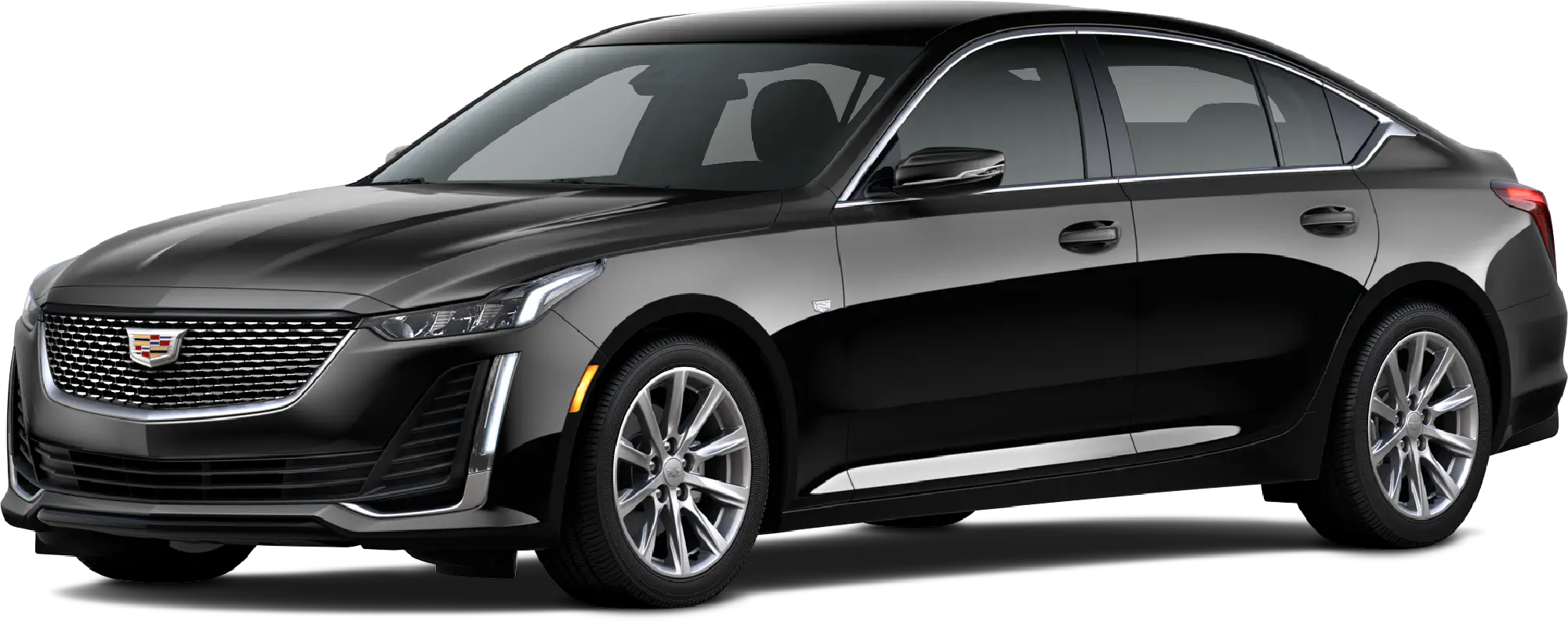
Cadillac's CT5 brings traditional luxury-sedan proportions into a market increasingly dominated by SUVs, offering rear-wheel-drive dynamics, sophisticated technology, and an appealing range of performance options.
Choosing between the available Cadillac CT5 trim levels requires more than comparing leather upholstery, wheel designs, and horsepower figures. Each version delivers a different balance of comfort, athleticism, equipment, and long-term ownership costs.
For shoppers researching the CT5 Luxury vs Sport or deciding whether the Premium Luxury and V-Series models justify their higher prices, understanding the differences between model years is particularly important. Cadillac substantially revised the CT5 lineup for 2025, eliminating certain trim configurations while introducing updated technology and styling. This guide examines the major trim levels, their driving characteristics, maintenance considerations, and potential repair expenses to help buyers identify the CT5 that best matches their priorities.
Introduced for the 2020 model year, the Cadillac CT5 replaced the CTS as the brand’s primary midsize luxury sports sedan. Its architecture emphasizes balanced handling, comfortable highway cruising, and a driving experience that distinguishes it from many front-wheel-drive luxury competitors.
The original lineup included Luxury, Premium Luxury, and Sport configurations, followed by the performance-oriented CT5-V and CT5-V Blackwing. Cadillac subsequently revised the model range, making model-year identification essential when comparing vehicles.
For 2020 through 2024, buyers can generally find the Luxury, Premium Luxury, and Sport trims, along with V-Series models depending on the year. Beginning with the refreshed 2025 CT5, Cadillac discontinued the base Luxury and Sport trims, leaving Premium Luxury and CT5-V variants as the principal offerings.
| Cadillac CT5 Trim | Primary Appeal | Typical Buyer |
|---|---|---|
| Luxury | Entry-level luxury and value | Drivers seeking comfort at a lower purchase price |
| Premium Luxury | Additional comfort and technology | Commuters and long-distance travelers |
| Sport | Athletic styling and sharper appearance | Drivers who prefer a sportier sedan |
| CT5-V | Stronger acceleration and performance tuning | Enthusiasts wanting everyday performance |
| CT5-V Blackwing | Maximum performance and driver engagement | Serious driving enthusiasts |
Equipment, powertrains, and availability vary by model year, making it important to compare vehicles using their original window stickers rather than trim names alone.
Among earlier Cadillac CT5 trim levels, the Luxury and Sport models offer distinctly different personalities despite sharing much of the same underlying architecture.
The CT5 Luxury prioritizes traditional Cadillac comfort, combining a relatively accessible purchase price with a refined cabin, quiet highway manners, and a turbocharged four-cylinder engine. Its standard rear-wheel-drive configuration provides balanced handling, while available all-wheel drive adds traction in challenging weather conditions.
The standard 2.0-liter turbocharged engine produces approximately 237 horsepower and 258 lb-ft of torque in the original CT5 lineup. Paired with a 10-speed automatic transmission, it delivers sufficient performance for commuting, highway merging, and everyday driving.
The Sport trim focuses more heavily on appearance and driver engagement. Depending on the model year, its distinctive features include darker exterior accents, sport-oriented seating, unique wheels, and interior details designed to create a more athletic atmosphere.
Despite the Sport designation, the standard Sport model should not be confused with the substantially more powerful CT5-V. In many configurations, Luxury and Sport models share the same four-cylinder powertrain, meaning the Sport’s principal advantages involve styling and equipment rather than dramatically quicker acceleration.
For buyers comparing the CT5 Luxury vs Sport on the used market, the Luxury often represents the stronger value when comfort and purchase price are the priorities. The Sport makes more sense for drivers who appreciate its appearance and additional equipment enough to justify the premium.
The Premium Luxury trim occupies an especially appealing position within the Cadillac CT5 lineup. It offers a more upscale ownership experience without requiring buyers to accept the higher operating costs associated with dedicated performance models.
Depending on the model year and selected options, Premium Luxury models can feature upgraded upholstery, additional driver-assistance technology, enhanced convenience features, and more sophisticated interior appointments.
Another important advantage is powertrain flexibility. Earlier Premium Luxury models offered the standard turbocharged four-cylinder engine or an available 3.0-liter twin-turbocharged V6 producing approximately 335 horsepower and 405 lb-ft of torque.
That V6 significantly changes the CT5’s character, providing stronger passing performance and effortless acceleration while retaining the sedan’s comfortable grand-touring personality.
The refreshed 2025 CT5 Premium Luxury also introduced a substantially redesigned dashboard featuring a 33-inch-diagonal curved display. This integrated digital interface modernized the cabin and helped the CT5 remain competitive against technologically advanced European luxury sedans.
For buyers seeking a Cadillac that feels appropriately luxurious without becoming excessively expensive to maintain, the Premium Luxury trim is arguably the lineup’s sweet spot.
Moving from the CT5 Sport into V-Series territory introduces meaningful mechanical differences rather than simply additional appearance upgrades.
The standard CT5-V uses a more powerful version of Cadillac’s twin-turbocharged 3.0-liter V6, producing approximately 360 horsepower and 405 lb-ft of torque. Performance-oriented suspension tuning, upgraded braking components, and specialized chassis calibration help deliver more responsive handling.
The CT5-V Blackwing takes an entirely different approach. Its supercharged 6.2-liter V8 produces 668 horsepower and 659 lb-ft of torque, making it one of the most powerful production sedans Cadillac has offered.
Unlike the standard CT5-V, the Blackwing also offers a six-speed manual transmission, appealing to enthusiasts who prioritize direct driver involvement.
| Performance Specification | CT5 Sport 2.0T | CT5-V | CT5-V Blackwing |
|---|---|---|---|
| Engine | 2.0L turbocharged I4 | 3.0L twin-turbo V6 | 6.2L supercharged V8 |
| Horsepower | 237 hp | 360 hp | 668 hp |
| Torque | 258 lb-ft | 405 lb-ft | 659 lb-ft |
| Transmission | 10-speed automatic | 10-speed automatic | 6-speed manual or 10-speed automatic |
| Driving Character | Comfortable with sporty styling | Performance-oriented daily driver | High-performance sports sedan |
Specifications reflect representative configurations. Availability and equipment vary by model year.
Although the CT5-V Blackwing delivers extraordinary performance, its capabilities bring additional ownership considerations. High-performance tires, larger brakes, specialized suspension components, and a supercharged engine can increase maintenance and repair expenses substantially.
For most drivers, the standard CT5-V offers a more practical compromise between acceleration, handling, and everyday usability.
Understanding potential repair expenses is an important part of comparing Cadillac CT5 trim levels, particularly when shopping for a used vehicle approaching the end of its original warranty coverage.
Modern luxury sedans incorporate advanced electronic systems, turbocharged engines, sophisticated transmissions, and increasingly complex driver-assistance technology. Although these features improve performance and convenience, diagnosing and repairing failures can be expensive.
The following estimates illustrate broad potential repair expenses at independent shops and dealerships. Actual prices vary considerably by location, model year, engine, labor rate, and the components involved.
| Service or Repair | Approximate Cost |
|---|---|
| Diagnostic inspection | $120–$250 |
| Routine oil and filter service | $90–$180 |
| Brake pads and rotors, per axle | $400–$900 |
| Cooling system repair | $350–$1,200 |
| Turbocharger replacement | $1,500–$3,500+ |
| Transmission-related major repair | $2,000–$6,000+ |
| Electronic module diagnosis and replacement | $300–$1,500+ |
| Adaptive suspension component replacement | $700–$2,000+ |
These figures are planning estimates rather than model-specific repair quotations. Blackwing components and certain dealer-only repairs can exceed the ranges shown.
Engine choice has a particularly important influence on long-term expenses. The four-cylinder CT5 has fewer turbochargers and a less complicated powertrain than the twin-turbocharged V6, while the supercharged Blackwing adds specialized performance hardware.
A pre-purchase inspection is especially valuable when considering higher-mileage V-Series models or vehicles with incomplete maintenance histories.
Cadillac CT5 reliability depends on several factors beyond the trim badge, including maintenance history, driving conditions, engine configuration, and previous repairs.
Buyers should investigate any reported transmission behavior, unusual engine noises, cooling-system concerns, electronic malfunctions, or suspension issues during a test drive. These symptoms do not necessarily indicate widespread defects, but they warrant professional evaluation before purchase.
Technical Service Bulletins, commonly called TSBs, are manufacturer-issued documents that provide dealerships and technicians with diagnostic information, updated repair procedures, or guidance for addressing known service conditions. Unlike safety recalls, TSBs do not automatically require manufacturers to provide free repairs, and coverage depends on the vehicle’s warranty status and applicable programs. Owners can research available manufacturer communications and recall information through the National Highway Traffic Safety Administration by entering their vehicle identification number or searching by year, make, and model.
A clean vehicle history report should also be supported by service records and an independent mechanical inspection. Documentation showing consistent oil changes, appropriate transmission servicing, and prompt attention to warning lights can be more meaningful than mileage alone.
Preventive maintenance plays an important role in keeping any Cadillac CT5 operating reliably, particularly vehicles equipped with turbocharged or supercharged engines.
Following Cadillac’s model-specific maintenance schedule is the best starting point. Owners should use the correct engine oil specification, maintain appropriate coolant levels, and address unusual mechanical symptoms before they develop into more expensive problems.
Turbocharged engines benefit from consistent lubrication and proper warm-up practices. Drivers should avoid demanding maximum performance immediately after a cold start and remain attentive to oil-level warnings or changes in engine behavior.
Transmission performance also deserves attention. Harsh shifts, hesitation, unusual vibrations, or fluid leaks should be evaluated rather than dismissed as normal characteristics of a performance-oriented sedan.
Tire maintenance is equally important, especially on Sport and V-Series models. Proper inflation, alignment checks, and routine tire inspections help preserve handling while reducing premature wear.
For Blackwing owners, brake and tire expenses should be incorporated into the annual ownership budget. Aggressive driving and track use can dramatically shorten the service life of these components compared with ordinary commuting.
A Cadillac CT5 can be a rewarding luxury sedan to own, but buyers should understand that maintenance expenses generally increase with performance capability and vehicle complexity.
The four-cylinder Luxury and Premium Luxury models are attractive for drivers who want Cadillac styling and comfort without the additional mechanical demands of high-output engines.
Sport models can provide similar mechanical simplicity while delivering a more aggressive appearance. The standard CT5-V introduces additional performance hardware, while the Blackwing represents a considerably greater financial commitment.
Depreciation can make used CT5 models appealing, especially when compared with their original sticker prices. Yet a lower purchase price does not necessarily mean lower repair expenses, since replacement parts and specialized labor remain associated with the vehicle’s original luxury-market positioning.
Owners planning to keep their CT5 beyond its original warranty period should evaluate their tolerance for unexpected repair bills and compare available vehicle service contract options.
For most buyers, the Premium Luxury stands out as the best overall Cadillac CT5 trim because it combines upscale equipment, comfortable driving characteristics, and available powertrain choices without moving fully into high-performance territory.
The Luxury remains an excellent used-car value for shoppers focused on affordability, while the Sport appeals to those who want more distinctive styling without the costs of a V-Series model.
Enthusiasts who regularly enjoy winding roads and responsive acceleration may find the CT5-V worth its higher purchase and maintenance expenses. The Blackwing is best reserved for buyers who specifically want its exceptional V8 performance and understand the associated operating costs.
Ultimately, the best CT5 is the one that balances the features you will actually use with the ownership expenses you are prepared to manage.
The Premium Luxury is generally the best all-around choice because it offers additional comfort, available performance upgrades, and desirable technology. Used Luxury models can offer better value for buyers prioritizing a lower purchase price.
The Luxury emphasizes comfort and affordability, while the Sport adds athletic styling and sport-oriented interior details. Both commonly use the same 2.0-liter turbocharged engine, so their standard performance is similar.
The CT5-V can justify its higher price for drivers who value stronger acceleration, upgraded chassis tuning, and a more engaging driving experience. Buyers primarily interested in comfortable commuting may find the Premium Luxury more economical.
The four-cylinder Luxury and Premium Luxury configurations generally offer the greatest potential for lower maintenance expenses. Actual costs depend on vehicle condition, driving habits, repair history, and required replacement parts.
Yes. Cadillac simplified the regular CT5 lineup with the 2025 refresh, discontinuing the Luxury and Sport trims while retaining Premium Luxury and performance-oriented V-Series offerings. Buyers interested in the discontinued trims can still find them on the used market.
Choosing the right Cadillac CT5 trim is only part of planning for long-term ownership. As the vehicle ages, unexpected mechanical or electrical repairs can become a significant expense, particularly on models equipped with advanced technology and performance-oriented components.
Granger Warranty offers vehicle protection options designed to help eligible owners manage qualifying repair expenses beyond their original warranty coverage. Available plans, covered components, exclusions, deductibles, and eligibility requirements should be reviewed carefully before purchasing.
Whether you’re considering a used CT5 Premium Luxury, an athletic Sport, or a more powerful V-Series model, understanding your coverage options can help you make a more informed ownership decision.
Visit Granger Warranty to explore available warranty plans, compare coverage options, and determine what protection may be appropriate for your Cadillac CT5.
Stay up to date with the latest news from Granger Warranty