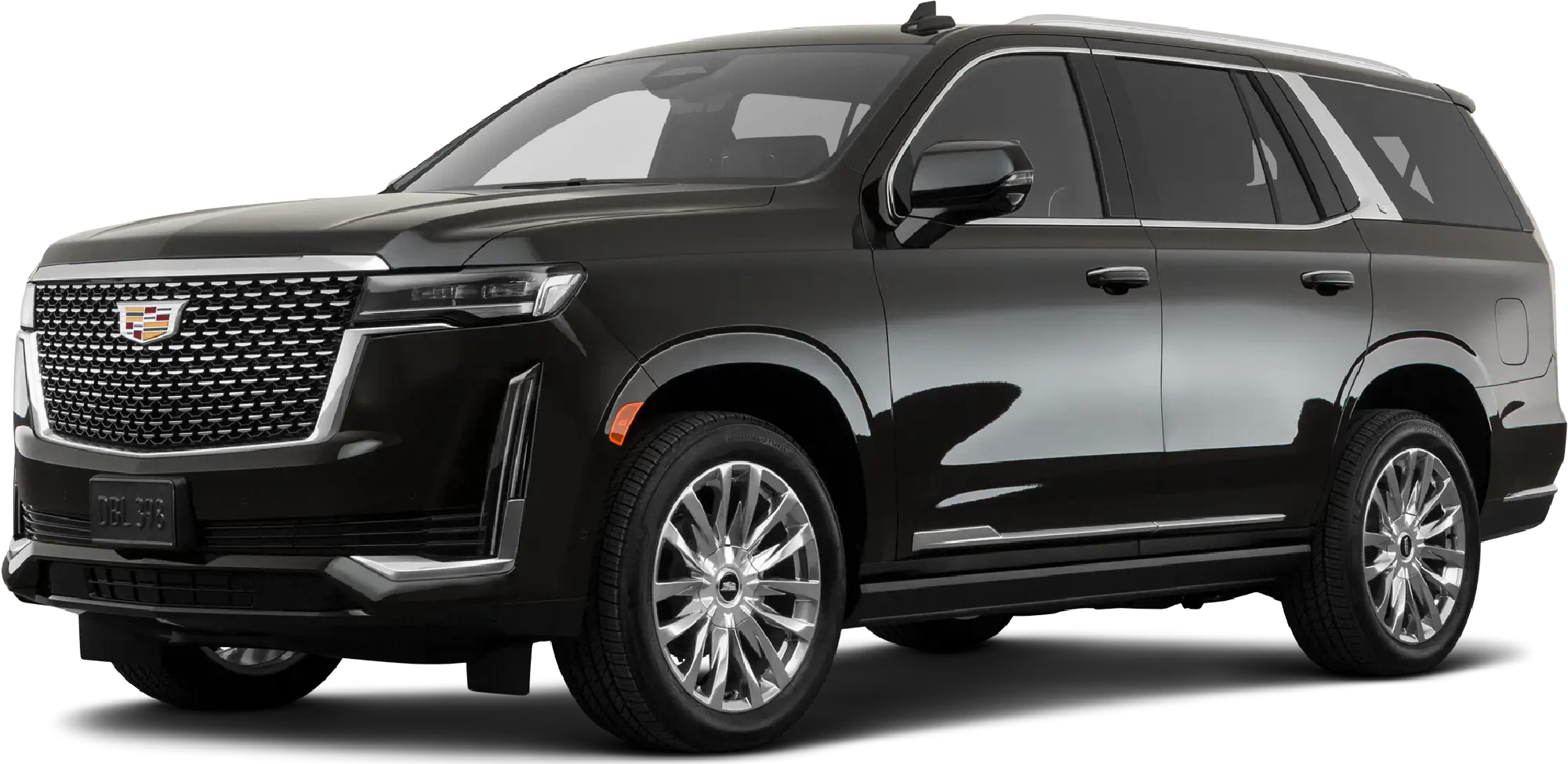
Best Cadillac Escalade ESV for Large Families
Shopping for a luxury SUV gets considerably more complicated when you need room for six, seven, or eight people plus everything they bring along.
An Escalade ESV Large Family Review quickly highlights why Cadillac’s extended-length SUV remains one of the more practical choices for buyers who want three usable rows without giving up substantial cargo capacity.
For 2026, Cadillac lists the Escalade ESV at roughly 227 inches long, with seating for up to eight passengers and as much as 142.2 cubic feet of maximum cargo space. The standard 6.2-liter V8 produces 420 horsepower and 460 lb-ft of torque, while Super Cruise hands-free driver assistance technology is standard.
Those specifications matter to families because the ESV is not simply an Escalade with extra sheet metal. Its additional length provides substantially more room behind the third row, making it easier to carry passengers and luggage simultaneously.
| 2026 Escalade ESV Family Specification | Figure |
|---|---|
| Maximum Seating | Up to 8 |
| Overall Length | About 227 in. |
| Maximum Cargo Space | Up to 142.2 cu. ft. |
| Cargo Space Behind Third Row | About 41.5 cu. ft. |
| Standard Engine | 6.2L V8 |
| Horsepower | 420 hp |
| Torque | 460 lb-ft |
| Maximum Available Towing | Up to 8,000 lbs. on properly equipped 2WD models |
Cadillac’s current specifications show about 41.5 cubic feet of cargo room behind the ESV’s third row, compared with 25.5 cubic feet in the standard-length Escalade. That difference can be particularly valuable when every seating position is occupied.
Large families should start with seating configuration rather than exterior styling or horsepower. Cadillac offers second-row configurations that can accommodate different passenger needs, including an available bench that helps increase total seating capacity to eight.
Captain’s chairs can make third-row access easier, particularly for older children who frequently climb in and out. A second-row bench provides the additional seat that families with more passengers may need.
For most family buyers, the regular 420-horsepower Escalade ESV powertrain supplies plenty of performance. The Escalade-V ESV raises output dramatically to 682 horsepower, but its performance emphasis is difficult to justify purely on family-utility grounds. Cadillac also estimates the V-Series at 11 mpg city and 17 mpg highway, compared with 15/19 mpg for certain rear-wheel-drive versions of the standard V8 ESV.
Luxury-oriented trims may make more sense for families interested in upgraded interior appointments rather than maximum performance. Buyers should compare current equipment carefully because Cadillac offers features such as rear entertainment, upgraded audio, premium seating and driver-assistance technology depending on configuration.
Many three-row SUVs advertise impressive maximum cargo figures, but that number usually assumes the rear seats have been folded. Large families rarely have that luxury.
Cadillac lists approximately 41.5 cubic feet behind the Escalade ESV’s third row. Fold the third row and capacity expands to roughly 94.1 cubic feet, while folding both rear rows provides up to approximately 142.2 cubic feet.
| Seating Situation | Approximate Escalade ESV Cargo Capacity |
|---|---|
| Three Rows In Use | 41.5 cu. ft. |
| Third Row Folded | 94.1 cu. ft. |
| Second and Third Rows Folded | Up to 142.2 cu. ft. |
That flexibility is valuable for airport runs, sports tournaments, family vacations and grocery trips. Parents can leave the third row occupied and still have meaningful luggage space, something considerably harder to accomplish in shorter three-row SUVs.
The ESV’s size creates a tradeoff. At nearly 19 feet long, parking garages, compact spaces and older home garages deserve consideration before purchasing. A test drive should include the places where your family actually drives rather than only open roads around the dealership.
Luxury SUVs combine expensive mechanical components with increasingly sophisticated electronics. Escalade ESV owners have a naturally aspirated V8, advanced infotainment systems, numerous cameras and sensors, sophisticated driver-assistance features and, on certain configurations, adaptive suspension technology.
Routine maintenance should be budgeted separately from unexpected repairs. Oil changes, tires, brakes, and other wear items are normal ownership expenses and typically are not the reason someone purchases extended protection.
Unexpected component failures are harder to budget for. An electronic control module, infotainment component, suspension system fault or sensor problem may require diagnostic time before technicians even determine which component needs replacement.
Repair pricing varies significantly by model year, trim, labor rate, location and the exact failed component. A diagnostic appointment may cost roughly $100 to $250 or more, while complex electronic, suspension, or drivetrain repairs can move into four-figure territory. Owners should request a written estimate from a qualified Cadillac service facility before authorizing repairs rather than relying on generalized online averages.
This cost exposure becomes more important for families planning to keep an Escalade ESV well beyond its original warranty period.
Following Cadillac’s maintenance schedule is the best starting point for long-term Escalade ESV ownership. Keep service records, address warning messages promptly and avoid postponing problems simply because the SUV still appears to drive normally.
Tires deserve special attention on a vehicle this large and heavy. Proper inflation, rotation and alignment can help maximize tire life while supporting predictable braking and handling.
Owners should also pay attention to battery condition. Modern luxury SUVs contain numerous electronic modules that depend on stable voltage, and a weak battery can sometimes contribute to confusing warnings or other electrical symptoms.
If your Escalade ESV uses Air Ride Adaptive Suspension or other advanced chassis technology, unusual ride-height behavior, warning messages or changes in ride quality deserve inspection. Early diagnosis can help identify a developing issue before additional components become involved.
Families that tow should follow Cadillac’s trailering requirements and account for passengers, cargo and accessories when determining available towing capacity. Cadillac notes that passenger and cargo weight can reduce how much a vehicle can safely tow.
A Technical Service Bulletin, commonly called a TSB, is information an automaker provides to dealership technicians about known vehicle conditions, diagnostic procedures or recommended repair methods. A TSB is different from a safety recall and does not automatically mean a repair will be performed free of charge.
Owners researching an Escalade ESV can search for manufacturer communications and vehicle information through the NHTSA website. Enter the applicable model year, make and model rather than assuming that information for one Escalade applies to every year or configuration.
Checking this information can be useful when researching a used ESV or investigating a recurring symptom. Service records and a pre-purchase inspection remain equally important because a bulletin alone does not establish the condition of a particular vehicle.
Complexity is not necessarily a reason to avoid the Escalade ESV. It is something buyers should incorporate into their ownership planning.
Families purchasing new have the benefit of Cadillac’s applicable new-vehicle warranty coverage. Used buyers should verify how much original coverage remains, if any, and should never assume a vehicle is covered simply because of its age.
Long-term owners face a different calculation. Keeping an Escalade ESV for many years means eventually assuming the financial risk associated with its V8 powertrain, electronics, climate-control equipment, driver-assistance hardware and available sophisticated suspension systems.
A thorough pre-purchase inspection is particularly important for used examples. Ask the technician to evaluate stored diagnostic codes, fluid leaks, suspension operation, electronics, climate controls, cameras and other major equipment in addition to performing a conventional mechanical inspection.
For a family that genuinely needs three rows plus substantial luggage capacity, the ESV’s additional size can outweigh those ownership considerations. Buyers who rarely use the third row may find the shorter Escalade easier to park and maneuver.
An extended vehicle service contract can make sense for families planning to retain an Escalade ESV after its original coverage expires, particularly when predictable repair expenses are important to the household budget.
Coverage details matter more than simply having a contract. Owners should understand the deductible, covered components, exclusions, repair authorization process, transfer provisions, and maintenance requirements before purchasing any plan.
Granger Warranty offers extended vehicle protection options with upfront pricing and nationwide acceptance. For Escalade ESV owners, comparing available coverage before the original warranty expires can provide time to evaluate the contract rather than making a decision after a major repair has already appeared.
Extended coverage should not be confused with routine maintenance. Tires, brake pads and scheduled services are examples of expenses owners should continue budgeting for separately unless a particular contract specifically states otherwise.
Yes, when equipped with the appropriate seating configuration. Cadillac lists seating for up to eight passengers, making the ESV suitable for larger households that require three rows.
Families should confirm the exact seating layout of the vehicle they are considering because some configurations use second-row captain’s chairs and therefore carry fewer passengers.
Current Cadillac specifications list approximately 41.5 cubic feet behind the third row. That is one of the ESV’s strongest family advantages because owners do not necessarily have to choose between carrying passengers and carrying luggage.
The ESV provides considerably more cargo capacity and additional third-row legroom. Cadillac lists approximately 41.5 cubic feet behind the ESV’s third row versus 25.5 cubic feet in the standard Escalade, while third-row legroom measures about 36.7 inches in the ESV versus 34.9 inches in the shorter model.
The shorter Escalade remains easier to maneuver, so families should weigh cargo needs against the ESV’s larger exterior footprint.
Potentially. Cadillac lists an available maximum towing capacity of up to 8,000 pounds for properly equipped 2WD Escalade ESV models.
Actual capability depends on configuration and total vehicle loading. Passengers, luggage, accessories and trailer tongue weight all matter, so owners should consult the applicable owner’s manual before towing.
It may be useful for owners who expect to keep the SUV beyond its original warranty and prefer more predictable exposure to eligible repair costs. The Escalade ESV contains expensive mechanical and electronic systems, making the terms and exclusions of any protection plan particularly important.
Compare coverage carefully and determine which components, deductibles, and repair procedures apply before purchasing.
An Escalade ESV Large Family Review ultimately comes down to space, usability, and long-term ownership expectations. Few luxury SUVs combine seating for up to eight with approximately 41.5 cubic feet of cargo room behind the third row, while the available towing capability adds another layer of versatility for family travel.
Families planning to keep their Escalade ESV beyond its original warranty period can also prepare for the financial side of long-term ownership. Visit Granger Warranty to explore available extended coverage options, compare pricing, and determine whether additional protection fits your ownership plans.
Stay up to date with the latest news from Granger Warranty