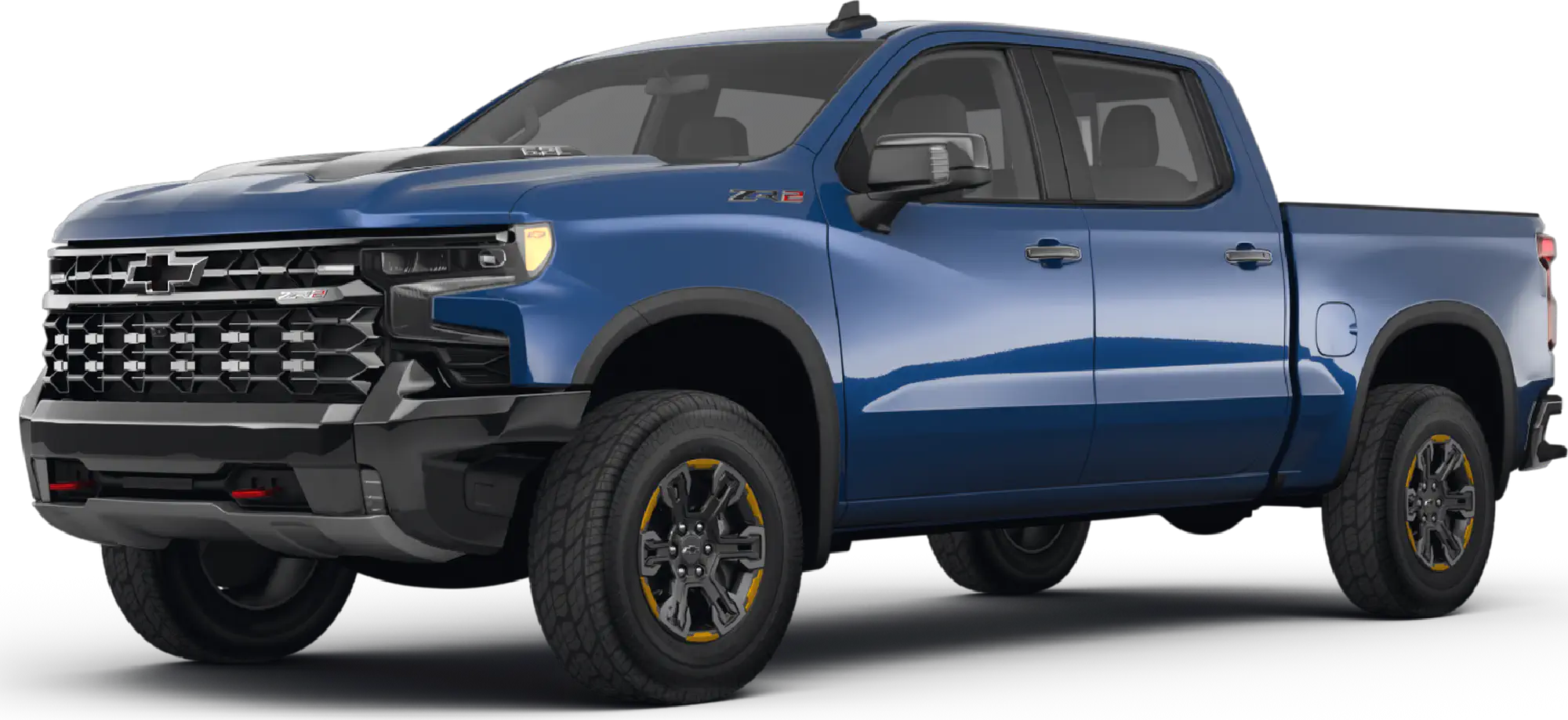
Best Chevrolet Silverado 1500 Engine: 2.7L Turbo vs 5.3L V8 vs 6.2L V8 vs Duramax
Choosing the right engine for a Chevrolet Silverado 1500 involves more than comparing horsepower figures or selecting the powertrain with the highest towing capacity.
Chevrolet offers four distinct engine options, each designed to satisfy different driving priorities, from daily commuting and light-duty hauling to demanding trailer work and long-distance highway travel. For buyers searching for the best Silverado engine, understanding how these powertrains compare in performance, reliability, fuel economy, and long-term ownership costs can make a significant difference.
The Silverado’s 2.7-liter TurboMax four-cylinder, 5.3-liter V8, 6.2-liter V8, and 3.0-liter Duramax turbo-diesel represent four approaches to powering a full-size pickup. While the V8 engines maintain Chevrolet’s traditional emphasis on naturally aspirated power, the turbocharged gasoline and diesel alternatives offer impressive torque and efficiency.
Determining which engine provides the best overall value requires examining how each performs beyond the specifications sheet.
Chevrolet’s Silverado 1500 engine lineup accommodates a broad range of truck buyers, although engine availability varies by model year, trim level, drivetrain, and configuration. Recent Silverado models offer everything from an efficient turbocharged four-cylinder to a powerful 6.2-liter V8, allowing owners to prioritize fuel consumption, acceleration, towing capability, or mechanical simplicity.
The following table compares approximate specifications for recent Silverado 1500 engine configurations.
| Engine | Horsepower | Torque | Transmission | Primary Advantage |
|---|---|---|---|---|
| 2.7L TurboMax I4 | 310 hp | 430 lb-ft | 8-speed automatic | Strong low-end torque and value |
| 5.3L EcoTec3 V8 | 355 hp | 383 lb-ft | 10-speed automatic | Balanced performance and versatility |
| 6.2L EcoTec3 V8 | 420 hp | 460 lb-ft | 10-speed automatic | Maximum gasoline-engine performance |
| 3.0L Duramax I6 Diesel | 305 hp | 495 lb-ft | 10-speed automatic | Fuel efficiency and towing torque |
Specifications reflect representative recent-model engines. Earlier versions, including the original 2.7L turbo and earlier Duramax diesel, have different ratings.
For most buyers, the 5.3-liter V8 offers an appealing combination of capability, familiarity, and broad availability. Drivers focused on low-speed torque may prefer the TurboMax, while frequent highway travelers and trailer owners should give the Duramax serious consideration.
The Silverado 2.7 vs 5.3 comparison is particularly important because these engines appeal to buyers who want a capable truck without paying for maximum horsepower. Despite having significantly less displacement, the turbocharged 2.7-liter engine produces more peak torque than the 5.3-liter V8, demonstrating how modern forced induction can change traditional expectations about engine performance.
Chevrolet’s 2.7-liter TurboMax develops 430 lb-ft of torque, giving it confident acceleration during city driving and strong pulling power at relatively low engine speeds. Its turbocharged design is especially useful when carrying moderate loads or accelerating onto highways, although the four-cylinder’s sound and character differ noticeably from a conventional V8.
The 5.3-liter V8 produces 355 horsepower and delivers its power with the smooth, familiar characteristics that have made Chevrolet small-block engines popular for decades. Its naturally aspirated design provides predictable throttle response without relying on turbocharger boost, making it an attractive choice for drivers who value traditional truck performance.
| Comparison | 2.7L TurboMax | 5.3L V8 |
|---|---|---|
| Horsepower | 310 hp | 355 hp |
| Torque | 430 lb-ft | 383 lb-ft |
| Power Delivery | Strong low-RPM torque | Smooth, naturally aspirated response |
| Fuel Economy | Generally competitive in mixed driving | Varies considerably by configuration |
| Towing Character | Strong for properly equipped light-duty applications | Versatile across many towing configurations |
| Best Suited For | Commuting, hauling, value | Mixed driving, towing, traditional V8 buyers |
Neither engine is universally superior. The TurboMax provides impressive torque for its size, while the 5.3-liter V8 offers additional horsepower and the driving character many full-size pickup owners prefer.
For drivers who regularly tow boats, campers, or equipment trailers, the 6.2-liter V8 and 3.0-liter Duramax diesel deserve particular attention. Both deliver substantial performance, but their power characteristics make them better suited to different driving conditions.
The 6.2-liter V8 produces 420 horsepower and 460 lb-ft of torque, making it the most powerful gasoline engine in the Silverado 1500 lineup. Its responsive acceleration and substantial horsepower reserves are particularly appealing when merging with traffic, climbing grades, or towing at highway speeds.
The 3.0-liter Duramax turbo-diesel takes a different approach, producing 495 lb-ft of torque while emphasizing low-RPM pulling power and fuel efficiency. Its inline-six configuration and diesel combustion characteristics make it especially appealing to drivers who frequently travel long distances with trailers.
Maximum towing ratings depend on the complete truck configuration rather than engine output alone. Properly equipped recent Silverado 1500 models can achieve approximately 13,300 pounds of maximum towing capacity with certain engine and equipment combinations, but individual trucks may have substantially lower ratings.
Buyers should always verify the vehicle’s specific trailering label, payload capacity, gross combined weight rating, and available towing equipment before selecting an engine.
Reliability is an important consideration when evaluating the best Silverado engine, particularly for buyers planning to keep their trucks beyond the original manufacturer warranty. Each powertrain incorporates technologies that improve performance and efficiency, but those systems can also introduce additional maintenance requirements and potential repair expenses.
The 2.7-liter TurboMax uses turbocharging and direct fuel injection to generate substantial output from a relatively small engine. Potential concerns include turbocharger-related issues, cooling-system faults, and problems involving sensors or electronic controls, although these possibilities do not establish that the engine is inherently unreliable.
The 5.3-liter and 6.2-liter V8 engines have used cylinder-deactivation technologies on various model years, including Active Fuel Management and Dynamic Fuel Management. Certain applications have experienced lifter-related failures, making maintenance history, model year, and engine identification particularly important when shopping for a used Silverado.
The 3.0-liter Duramax introduces diesel-specific considerations, including exhaust aftertreatment components, diesel exhaust fluid systems, fuel-system maintenance, and emissions-related sensors. Some repairs can be expensive, although the engine’s strong torque delivery and highway efficiency remain compelling advantages.
A Technical Service Bulletin, commonly called a TSB, is a manufacturer-issued document that provides dealership technicians with diagnostic information, repair procedures, or guidance about known vehicle conditions. Unlike a safety recall, a TSB does not automatically mean a repair is free or that every vehicle is affected. Silverado owners can research manufacturer communications, complaints, and recalls through the National Highway Traffic Safety Administration by searching for their vehicle’s model year or VIN.
Repair expenses can vary significantly among Silverado engines, particularly as mileage increases and major powertrain components begin requiring attention. Labor rates, parts availability, vehicle age, and the exact failure determine the final invoice, making broad estimates more useful for planning than predicting a specific repair.
| Potential Repair | Approximate Cost |
|---|---|
| Turbocharger Replacement | $1,500 to $3,500 |
| V8 Lifter Repair | $2,000 to $5,000 |
| Fuel Injector Replacement | $400 to $1,500 |
| Diesel Emissions System Repair | $500 to $3,000 |
| Major Engine Repair or Replacement | $6,000 to $12,000+ |
| Engine Diagnostic Inspection | $150 to $300 |
These are broad illustrative estimates, not model-specific quotes. Costs vary by engine, location, repair scope, and whether additional components require replacement.
The 2.7-liter TurboMax may expose owners to turbocharger-related expenses, while V8 repairs can become costly when internal engine components require extensive labor. Duramax owners should also account for diesel-specific diagnostic procedures and emissions equipment.
An extended vehicle service contract may help reduce exposure to certain unexpected mechanical repair expenses, depending on the components covered, exclusions, deductible, and contract terms.
Proper maintenance is essential regardless of which Silverado engine a buyer selects. Chevrolet’s modern powertrains use sophisticated engine management systems, and maintaining clean fluids, correct operating temperatures, and properly functioning sensors can help prevent avoidable problems.
Engine oil should meet the manufacturer’s specified viscosity and performance requirements, with changes performed according to the vehicle’s maintenance schedule and operating conditions. Trucks frequently used for towing, extended idling, dusty environments, or severe-duty operation may require additional maintenance attention.
TurboMax owners should pay particular attention to cooling-system performance and proper lubrication, while V8 owners should investigate unusual ticking noises, misfires, or changes in oil consumption. Duramax drivers must also maintain the diesel fuel system, replace fuel filters at the recommended intervals, and use the correct diesel exhaust fluid.
Keeping detailed maintenance records is especially valuable when purchasing or selling a used Silverado. Documentation can help establish that recommended services were completed and may also be important when requesting warranty-covered repairs.
Potential mechanical problems should influence a Silverado purchase, but they should not automatically eliminate an engine from consideration. Every modern pickup powertrain involves trade-offs, and the best choice often depends more on how the truck will be used than on isolated reports of mechanical failures.
Buyers considering a used Silverado should prioritize service history, diagnostic inspections, evidence of previous repairs, and verification of outstanding recalls. A pre-purchase inspection performed by a qualified technician can identify warning signs that might otherwise be overlooked during a short test drive.
The 5.3-liter V8 remains a strong all-around choice, although buyers should investigate applicable cylinder-deactivation-related concerns. The 2.7-liter TurboMax is attractive for everyday driving, the 6.2-liter V8 emphasizes performance, and the Duramax offers compelling efficiency for drivers who accumulate substantial highway mileage.
For long-term ownership, evaluating potential repair expenses alongside purchase price and fuel consumption provides a more complete understanding of total ownership costs.
No single Silverado engine can be declared the most reliable across every model year and driving condition. The 5.3-liter V8 offers an established engine architecture, but its cylinder-deactivation components deserve attention, while the TurboMax and Duramax have different mechanical and maintenance considerations.
The 2.7-liter TurboMax can offer a fuel-economy advantage over certain 5.3-liter V8 configurations, particularly during lighter-duty driving. Actual results depend on drivetrain, axle ratio, tires, driving habits, and model year, so buyers should compare the EPA ratings of specific vehicles.
The 6.2-liter V8 is worthwhile for buyers who prioritize acceleration, horsepower, and premium gasoline-engine performance. Drivers who primarily commute or perform occasional light towing may find the 5.3-liter V8 or TurboMax more economical.
Diesel maintenance can involve additional expenses for fuel filters, emissions equipment, and diesel-specific service procedures. Its fuel efficiency may offset some operating costs for high-mileage drivers, although fuel prices and repair expenses should be considered.
All four engines can be reasonable long-term ownership choices when properly maintained. Buyers planning to exceed 100,000 miles should consider their driving requirements, maintenance budgets, model-specific repair histories, and available mechanical breakdown protection rather than selecting an engine based solely on displacement.
Selecting the best Silverado engine is only part of making a smart long-term ownership decision. Modern Chevrolet trucks contain increasingly sophisticated mechanical and electronic systems, and unexpected engine or transmission repairs can become substantial expenses after the original manufacturer’s warranty expires.
For Silverado owners planning to keep their trucks for many years, comparing extended vehicle service contract options can be a practical part of ownership planning. Coverage should be evaluated carefully, including eligibility, covered components, exclusions, deductibles, and repair authorization requirements.
Granger Warranty provides an opportunity to explore vehicle protection options and compare available coverage for eligible vehicles. Understanding the potential costs associated with Silverado engine repairs can help owners determine whether additional protection makes financial sense.
Whether your Silverado is powered by the efficient 2.7-liter TurboMax, versatile 5.3-liter V8, performance-focused 6.2-liter V8, or torque-rich Duramax diesel, choosing the right engine and planning for future maintenance can help preserve its usefulness and value.
Visit Granger Warranty to explore available coverage options and make a more informed decision about protecting your Chevrolet Silverado 1500.
Stay up to date with the latest news from Granger Warranty