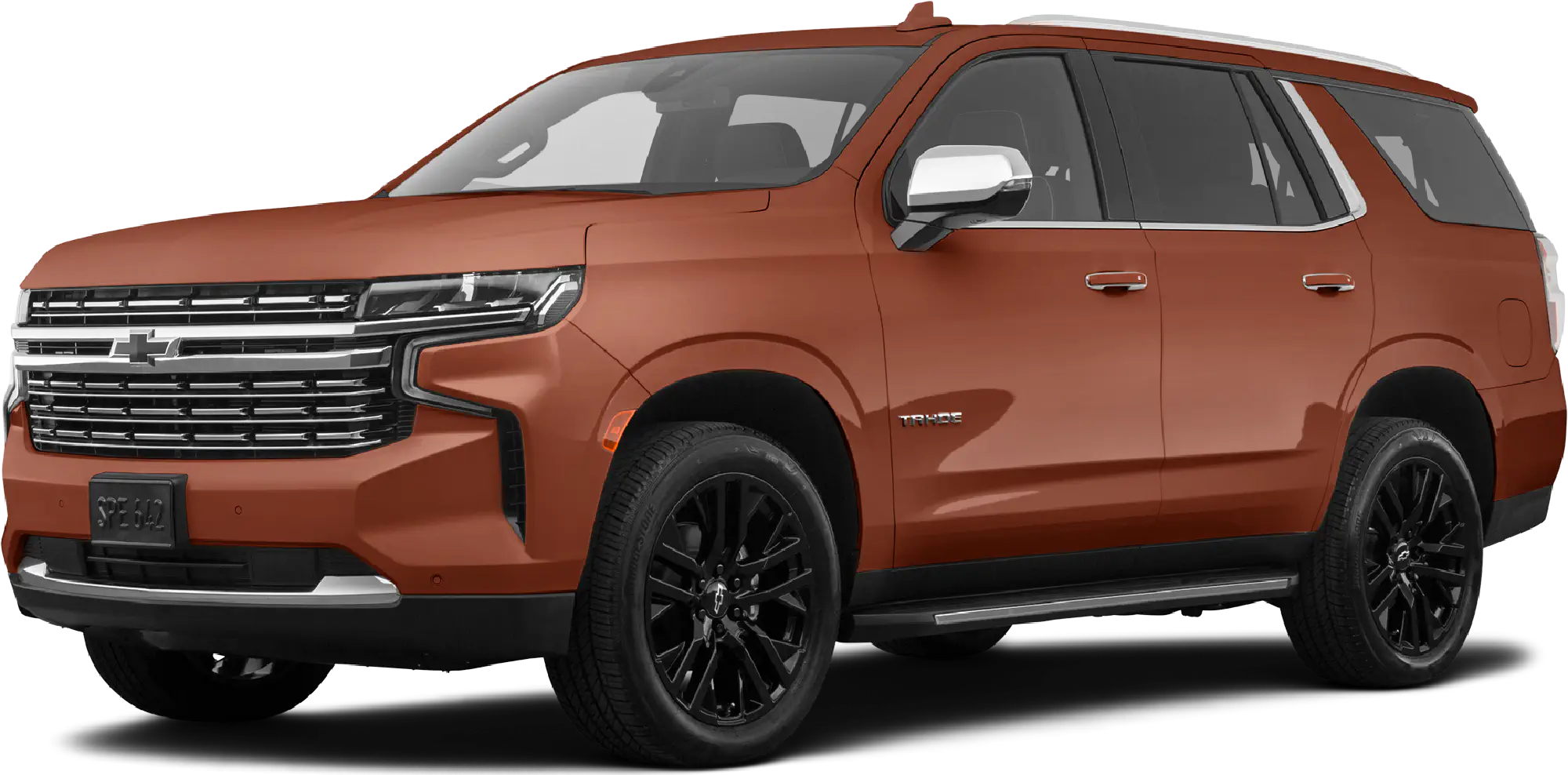
Best GM Full-Size SUV: Tahoe vs Yukon vs Escalade
Shopping for a full-size GM SUV can quickly turn into a question of how much luxury, capability, and equipment you actually need. Chevrolet Tahoe, GMC Yukon, and Cadillac Escalade share important engineering fundamentals, yet each targets a noticeably different buyer.
This GM Full Size SUV Comparison looks beyond badges and styling to examine powertrains, capability, ownership costs, repair exposure, and long-term value. Tahoe generally emphasizes value and versatility, Yukon occupies the premium middle ground, and Escalade delivers Cadillac’s highest level of luxury and technology.
Chevrolet Tahoe is typically the practical starting point. It offers three-row seating, substantial cargo capacity, strong towing capability, and a broad trim lineup without requiring buyers to move into GMC or Cadillac pricing.
GMC Yukon takes essentially the same full-size SUV formula and adds a more upscale presentation. Higher trims such as Denali and Denali Ultimate move considerably closer to luxury-SUV territory through upgraded interior materials, technology, styling, and available suspension equipment.
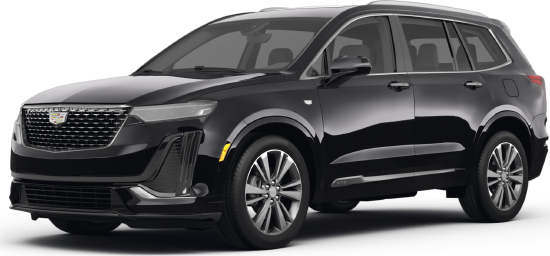
Cadillac Escalade sits at the top. Buyers are paying not only for transportation and capability, but also for Cadillac-specific styling, premium cabin appointments, technology, and the prestige associated with the Escalade nameplate.
| Category | Chevrolet Tahoe | GMC Yukon | Cadillac Escalade |
|---|---|---|---|
| Best Fit | Value-focused families | Premium SUV buyers | Luxury SUV buyers |
| Seating | Up to 9 depending on configuration | Three-row configurations | Up to 8 |
| Gas V8 Choices | 5.3L and 6.2L | 5.3L and 6.2L | 6.2L |
| Diesel Availability | 3.0L Duramax | 3.0L Duramax | Not listed for 2026 |
| Maximum Towing | Up to 8,400 lbs. | Up to 8,200 lbs. | Up to 8,100 lbs. |
| Overall Character | Practical and versatile | Premium and capable | Luxury-focused |
For 2026, Chevrolet lists the Tahoe with a 355-horsepower 5.3-liter V8, 420-horsepower 6.2-liter V8, and available 305-horsepower 3.0-liter Duramax turbo-diesel producing 495 lb-ft of torque. Maximum available towing is rated at 8,400 pounds.
GMC offers the Yukon with the same basic trio of engine choices. GMC lists the 5.3-liter at 355 horsepower, the 6.2-liter at 420 horsepower, and the 3.0-liter Duramax at 305 horsepower and 495 lb-ft of torque.
Cadillac takes a different approach for the 2026 Escalade. Its standard 6.2-liter V8 produces 420 horsepower and 460 lb-ft of torque, while maximum available towing reaches 8,100 pounds in the standard-length model. Buyers seeking substantially more performance can move to the 682-horsepower supercharged Escalade-V.
Shared architecture does not mean identical driving experiences.
Tahoe can range from relatively straightforward family transportation to a surprisingly sophisticated SUV. Available Magnetic Ride Control and Four-Corner Air Ride Adaptive Suspension can improve body control and ride comfort, particularly on upper trims.
Yukon offers similar technology but packages it with a more premium personality. Available Air Ride Adaptive Suspension can alter ride height based on conditions, while certain versions also offer Magnetic Ride Control.
Escalade puts greater emphasis on refinement. Its appeal becomes especially clear for buyers who spend significant time traveling with passengers or simply want a more luxurious cabin around the underlying full-size GM platform.
Size also deserves consideration. Cadillac lists 25.5 cubic feet of cargo space behind the third row in the standard Escalade and 41.5 cubic feet in the longer Escalade ESV. Maximum cargo space expands to 120.5 and 142.2 cubic feet, respectively.
For buyers who regularly carry people and luggage simultaneously, the longer-wheelbase Yukon XL and Escalade ESV can therefore be worth considering alongside their standard-length counterparts.
Mechanical complexity is an important part of this comparison because these SUVs can remain in family fleets for many years.
The naturally aspirated V8 engines provide the traditional GM full-size SUV experience, while the 3.0-liter Duramax offers a different balance of torque and highway efficiency. Chevrolet says the current Tahoe diesel produces 495 lb-ft of torque and can deliver an EPA-estimated maximum highway range of 624 miles per tank in the appropriate configuration.
Complexity increases as buyers add features. Four-wheel drive, adaptive suspension, air suspension, advanced driver-assistance systems, large infotainment displays, power accessories, and sophisticated emissions equipment can all create additional repair exposure as a vehicle ages.
That does not mean buyers should avoid highly equipped versions. It means purchase price should not be the only number considered when comparing a five- or ten-year ownership period.
A well-maintained Tahoe with fewer expensive options may ultimately cost less to own than a highly equipped Yukon or Escalade. Conversely, buyers who genuinely use premium suspension, trailering, driver-assistance, or luxury features may find the additional expense worthwhile.
Actual repair bills vary considerably according to model year, powertrain, labor rates, location, and the exact failed component. Diagnosis is particularly important because several different systems can produce similar warning messages or drivability symptoms.
Approximate out-of-pocket costs for modern full-size SUVs can fall into ranges like these:
| Repair or Service | Approximate Cost Range |
|---|---|
| Professional Diagnostic Evaluation | $150-$250+ |
| Battery or Charging-System Repair | $250-$1,000+ |
| Cooling-System Repair | $400-$1,500+ |
| Suspension Component Repair | $500-$2,500+ |
| Air or Adaptive Suspension Repair | $1,000-$4,000+ |
| Diesel Emissions-System Repair | $500-$3,000+ |
| Transmission Repair or Replacement | $2,500-$7,000+ |
| Major Engine Repair | $3,000-$10,000+ |
| Advanced Electronics or Display Repair | $500-$3,000+ |
These figures are general planning ranges rather than quotes. A dealership or qualified repair facility should diagnose the vehicle before an owner assumes that a warning light requires a major component replacement.
Escalade owners may face particularly significant exposure because luxury-specific electronics and comfort equipment add systems that simply do not exist on more basic Tahoe configurations. A heavily optioned Yukon can present similar considerations.
Preventive maintenance matters more as vehicle complexity increases.
Follow the maintenance schedule specified for your exact model year, engine, drivetrain, and operating conditions. Oil changes, cooling-system service, transmission maintenance, differential and transfer-case fluids where applicable, brakes, tires, and diesel-specific maintenance should not be treated as interchangeable across every Tahoe, Yukon, and Escalade.
Pay attention to warning messages rather than waiting for obvious mechanical symptoms. Modern GM SUVs monitor numerous systems electronically, and early diagnosis can sometimes prevent a relatively manageable issue from becoming a more expensive repair.
Owners with air suspension or adaptive suspension should also pay attention to changes in ride height, excessive bouncing, unusual compressor operation, or suspension warnings. Diesel owners should understand that the Duramax adds emissions equipment and maintenance considerations not found on gasoline V8 models.
Towing deserves extra attention. Chevrolet rates properly configured Tahoe models for up to 8,400 pounds, while GMC lists Yukon capability up to 8,200 pounds and Cadillac lists Escalade at up to 8,100 pounds. Actual capacity depends on configuration, equipment, passengers, cargo, and trailer setup.
A Technical Service Bulletin, or TSB, is manufacturer information supplied to service professionals describing known vehicle conditions, diagnostic procedures, or repair guidance. A TSB is not automatically a recall, and its existence does not necessarily mean every vehicle of that model will experience the condition.
Owners researching a Tahoe, Yukon, or Escalade can search manufacturer communications and Technical Service Bulletins through the NHTSA recall and vehicle-information system. NHTSA explains that manufacturer communications can be found by searching for the applicable vehicle and opening the manufacturer communications information in the results.
Concern should be proportional to the vehicle’s age, equipment, maintenance history, and intended ownership period.
Someone leasing a new Tahoe for a few years has a different financial risk profile than someone purchasing a five-year-old Escalade and planning to drive it beyond 100,000 miles. As vehicles age, expensive components become increasingly relevant because even a single major repair can materially change the economics of ownership.
Tahoe is arguably the easiest model to recommend to buyers prioritizing value. It provides much of the capability and passenger space of its more expensive siblings while allowing shoppers to avoid luxury features they may not need.
Yukon makes sense for someone willing to pay more for styling, interior appointments, and available premium equipment without necessarily moving all the way to Cadillac.
Escalade remains the choice for shoppers who specifically want a luxury flagship. Buyers should simply recognize that maintaining a luxury SUV outside its original warranty period can carry different financial expectations than maintaining a more modestly equipped vehicle.
There is no universal winner because the three vehicles deliberately serve different customers.
Tahoe is the strongest overall value. It combines full-size dimensions, available V8 or diesel power, serious towing capability, and a broad trim range.
Yukon is the best middle ground. It offers much of the upscale feel shoppers want from a premium SUV while retaining familiar GM truck-based capability. GMC’s available 5.3-liter V8, 6.2-liter V8, and Duramax diesel also provide buyers with meaningful powertrain flexibility.
Escalade is the luxury choice. Its standard 420-horsepower V8, upscale interior, distinctive design, available performance variants, and Cadillac-specific equipment make the price premium easier to understand for buyers who prioritize comfort and presence.
For many families, a Tahoe LT, Premier, or similarly equipped model will provide everything they realistically need. Yukon becomes attractive when the premium experience matters, while Escalade is best approached as a luxury purchase rather than simply a more expensive Tahoe.
Not automatically. Yukon generally offers a more premium presentation and higher-end trim options, while Tahoe often provides stronger value for buyers primarily concerned with space, capability, and practicality.
Because the vehicles share important engineering fundamentals, the decision often comes down to trim level, equipment, styling, and price rather than one being fundamentally superior.
It can be for buyers who value luxury materials, Cadillac-specific technology, styling, and the overall flagship experience. Someone primarily interested in towing, passenger room, and everyday utility may find a well-equipped Yukon delivers more value.
The Escalade makes the most sense when its additional luxury equipment is something the buyer will actually appreciate.
Tahoe has the highest maximum figure among the standard 2026 models discussed here, with Chevrolet advertising up to 8,400 pounds when properly equipped. GMC lists Yukon at up to 8,200 pounds, while Cadillac lists the standard Escalade at up to 8,100 pounds.
Never select a tow vehicle using the headline maximum alone. Payload, drivetrain, axle configuration, passengers, cargo, hitch equipment, and the specific vehicle’s ratings all matter.
Tahoe and Yukon provide the broadest selection because buyers can choose between 5.3-liter and 6.2-liter gasoline V8 engines plus the available 3.0-liter Duramax turbo-diesel.
For 2026, Escalade focuses on the 6.2-liter gasoline V8, with the supercharged Escalade-V serving buyers seeking significantly more performance.
Tahoe is a compelling choice for owners focused on controlling purchase and ownership costs, particularly in less complex configurations. Yukon offers a good compromise for buyers who want more premium features without stepping fully into Cadillac territory.
Escalade can still be an excellent long-term vehicle, but owners should budget for the possibility that its additional luxury, electronic, and suspension equipment may be more expensive to repair as the SUV ages.
Tahoe, Yukon, and Escalade are capable vehicles, but today’s full-size SUVs combine sophisticated engines, transmissions, suspension systems, electronics, and driver-assistance technology. Keeping one well beyond its original warranty period can therefore expose an owner to repair bills that are difficult to predict.
An extended coverage plan can help turn some eligible unexpected repair expenses into more predictable ownership costs. Coverage varies by plan, so buyers should always review exclusions, deductibles, eligibility requirements, and covered components before purchasing.
Granger Warranty offers extended vehicle coverage with straightforward online purchasing and nationwide acceptance. Many plans may also be transferable, which can be useful for owners who sell their vehicle before the coverage term ends.
Before deciding whether coverage makes sense, compare the plan with your Tahoe, Yukon, or Escalade’s age, mileage, equipment, existing warranty, and expected ownership period. Visit Granger Warranty to review available coverage options and determine whether extended protection fits your long-term ownership strategy.
Stay up to date with the latest news from Granger Warranty