Best GMC Canyon for Overlanding and Weekend Camping
Adventure-ready midsize pickups have become increasingly popular among drivers who want to explore remote trails without sacrificing everyday comfort, and the GMC Canyon has emerged as a compelling option for weekend explorers.
With its turbocharged engine, available four-wheel drive, specialized off-road suspension, and manageable dimensions, the Canyon offers an appealing combination of capability and practicality for drivers who enjoy camping beyond established campgrounds.
For buyers researching GMC Canyon overlanding, choosing the right trim involves more than finding the truck with the largest tires or most aggressive appearance. Payload capacity, suspension performance, cargo organization, fuel range, and long-term maintenance expenses all influence how comfortably a Canyon can support extended outdoor adventures. The AT4 and AT4X deserve particular attention, although the less expensive Elevation can also serve as an effective foundation for a carefully planned camping build.
GMC redesigned the Canyon for the 2023 model year, introducing a more rugged platform with improved off-road geometry, a standard turbocharged four-cylinder engine, and a lineup that places greater emphasis on outdoor recreation. Compared with traditional full-size pickups, the Canyon’s smaller footprint makes it easier to maneuver along narrow forest roads, rocky trails, and crowded campground entrances.
Third-generation Canyon models use a 2.7-liter turbocharged four-cylinder engine producing 310 horsepower and 430 lb-ft of torque, paired with an eight-speed automatic transmission. That substantial torque output is particularly useful when climbing steep grades, traveling with camping equipment, or maintaining steady progress across uneven terrain.
Available four-wheel drive, an off-road-oriented chassis, and multiple suspension configurations allow buyers to match their Canyon to the conditions they expect to encounter. Ground clearance and suspension travel become especially important when navigating rutted access roads, while underbody protection helps reduce the likelihood of damage from rocks and trail obstacles.
For overlanding enthusiasts, the Canyon’s appeal extends beyond its mechanical specifications. Its crew-cab configuration provides room for passengers and smaller equipment, while the pickup bed can accommodate rooftop tents, recovery gear, portable refrigerators, and other camping accessories.
The challenge is selecting the right configuration without spending unnecessarily on equipment that may rarely be used.
Three Canyon trims stand out for drivers interested in camping and outdoor exploration: Elevation, AT4, and AT4X. Each offers a different balance of price, comfort, and trail capability, making the ideal choice dependent on how far from paved roads an owner intends to travel.
| GMC Canyon Trim | Off-Road Characteristics | Camping Advantages | Best For |
|---|---|---|---|
| Elevation | Off-road-oriented stance, available 4WD | Lower initial cost leaves room for accessories | Budget camping builds and maintained trails |
| AT4 | Standard 4WD, off-road suspension, traction-focused equipment | Balanced capability and daily comfort | Regular camping and moderate trails |
| AT4X | Specialized suspension, locking differentials, advanced trail hardware | Strong technical terrain capability | Challenging off-road exploration |
Equipment varies by model year, and buyers should verify individual vehicle specifications before purchasing.
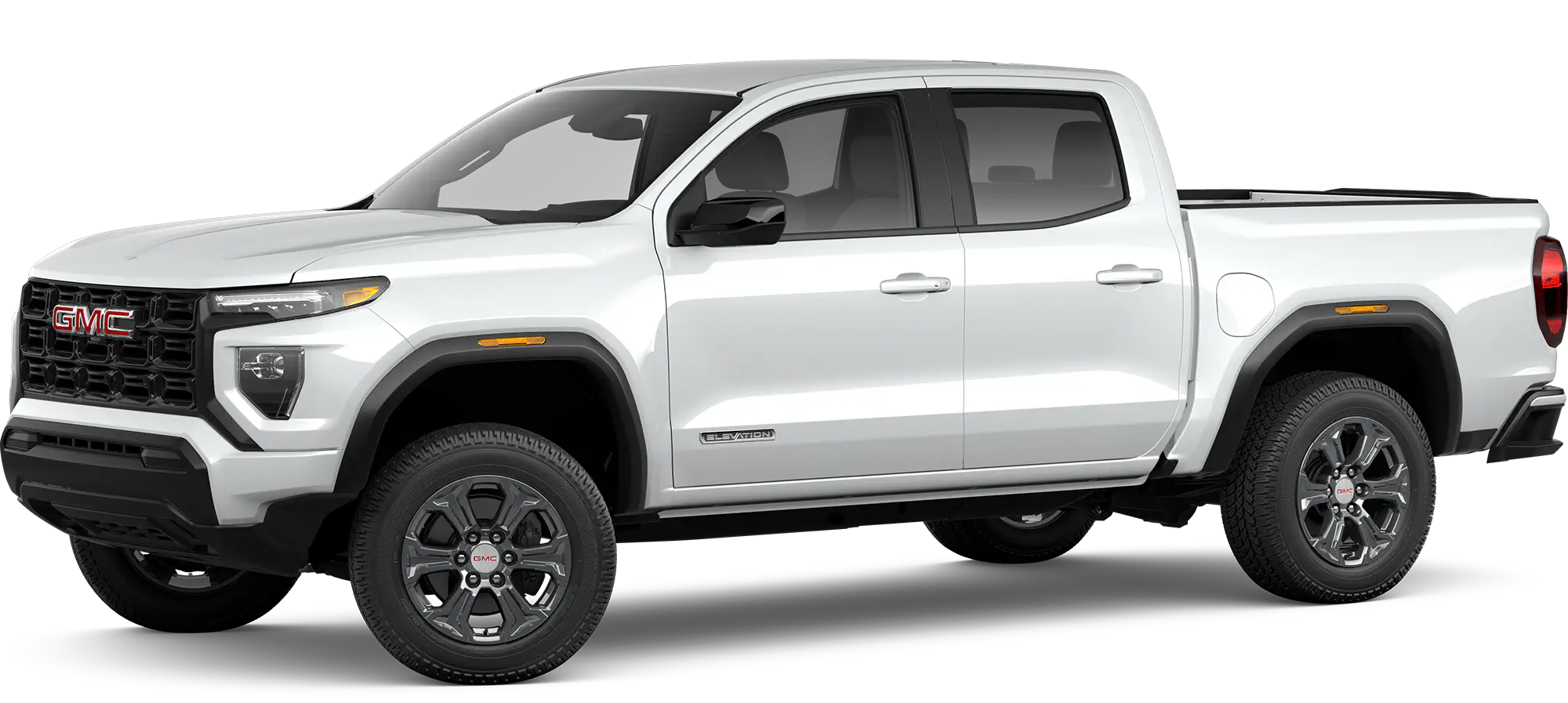
The Canyon Elevation provides an appealing starting point for owners who want to create a customized camping truck without paying for the most specialized off-road equipment.
Its turbocharged engine and practical pickup configuration provide the essentials for weekend travel, while available four-wheel drive expands its usefulness on dirt roads and in changing weather conditions.
An Elevation equipped with suitable all-terrain tires, recovery equipment, and a lightweight camping setup can handle many established forest roads and developed campsites. Owners who primarily travel on maintained trails may find that additional money is better spent on quality camping equipment rather than advanced suspension components.
For many buyers, the GMC Canyon AT4 represents the best overall choice for overlanding because it combines meaningful off-road capability with the comfort and convenience expected from a modern daily driver.
Standard four-wheel drive, an off-road-tuned suspension, and terrain-oriented features provide greater confidence when traveling over loose gravel, uneven tracks, and moderately challenging trails.
The AT4 is particularly appealing to owners who use their trucks for commuting during the week and outdoor recreation on weekends. Its capabilities exceed what many casual campers require, yet it avoids some of the added expense associated with the more specialized AT4X.
The Canyon AT4X is designed for drivers who expect to encounter demanding terrain where traction, suspension articulation, and underbody protection become critical.
Its Multimatic DSSV dampers, front and rear electronic locking differentials, and specialized off-road equipment distinguish it from the AT4. These features provide tangible advantages when navigating rocky climbs, deeply rutted trails, and uneven surfaces that challenge conventional suspension systems.
For Canyon AT4X camping, the primary advantage is the ability to reach remote destinations that may be difficult for less specialized pickups. Drivers should remember, though, that advanced trail capability does not automatically translate into greater payload capacity or more room for camping equipment.
Building a practical overlanding truck requires careful consideration of how equipment will be stored, secured, and accessed during a trip. The Canyon’s approximately five-foot cargo bed provides useful space, but its relatively compact dimensions make organization particularly important.
Bed racks are popular because they allow owners to mount rooftop tents above the cargo area while preserving room underneath for coolers, storage containers, recovery equipment, and other supplies.
A lightweight rooftop tent can transform the Canyon into a convenient camping platform, although owners must verify the rack’s dynamic and static load ratings, the tent manufacturer’s requirements, and the vehicle’s payload capacity.
| Camping Equipment | Primary Benefit | Important Consideration |
|---|---|---|
| Bed Rack and Rooftop Tent | Elevated sleeping area | Rack ratings, vehicle payload, and center of gravity |
| Portable Refrigerator | Reliable food storage | Electrical demand and battery capacity |
| Recovery Boards | Traction assistance | Secure mounting and proper recovery techniques |
| Portable Air Compressor | Tire pressure adjustment | Suitable pressure and inflation capability |
| Water Storage System | Drinking and cooking water | Weight distribution and secure mounting |
| Auxiliary Lighting | Better campsite visibility | Electrical installation and local regulations |
| Bed Storage Drawers | Organized equipment access | Added weight and reduced cargo volume |
Weight management deserves particular attention because camping accessories can accumulate hundreds of pounds before passengers, food, water, and personal belongings are included.
A rooftop tent, steel rack, storage drawers, recovery equipment, and several days of supplies can substantially reduce the available payload. Owners should consult the certification label on their individual Canyon rather than relying on a general specification published for another trim.
The purchase price of a Canyon represents only part of the investment required for overlanding. Specialized equipment, tire replacement, suspension maintenance, and occasional mechanical repairs can add to ownership expenses, particularly when the truck regularly encounters rough terrain.
Fortunately, owners do not need an elaborate build to enjoy weekend camping. A modest equipment package with dependable tires, basic recovery gear, and secure storage can provide considerable versatility without the expense of a fully outfitted expedition vehicle.
The following estimates illustrate common accessory and service costs. Actual prices vary by location, equipment quality, vehicle condition, and labor rates.
| Item or Service | Approximate Cost |
|---|---|
| All-Terrain Tire Set | $800 to $1,600 |
| Bed Rack System | $500 to $1,800 |
| Rooftop Tent | $900 to $3,500 |
| Portable Refrigerator | $300 to $1,200 |
| Auxiliary Lighting Installation | $250 to $900 |
| Suspension Inspection or Diagnosis | $100 to $250 |
| Four-Wheel-Drive System Diagnosis | $150 to $300 |
| Suspension Component Repair | $400 to $2,000+ |
| Turbocharger Replacement | $1,500 to $3,500+ |
These are broad planning estimates, not Canyon-specific repair quotes. Major repairs involving electronic drivetrain components, advanced suspension hardware, or turbocharger systems can exceed the indicated ranges depending on the failed component and repair complexity.
The AT4X’s specialized suspension deserves additional consideration because its sophisticated dampers and off-road components may cost more to replace than conventional equipment.
Owners should also distinguish between factory-installed components and aftermarket accessories when evaluating warranty coverage. Damage caused by improper modifications, overloading, or off-road impacts may not qualify for protection under a vehicle service contract.
Regular maintenance becomes especially important when a Canyon is used for dusty trails, steep climbs, water crossings, and extended periods away from paved roads. Although the truck is engineered for demanding driving conditions, off-road use can accelerate wear on tires, suspension components, brakes, and drivetrain seals.
Owners should follow GMC’s maintenance schedule and review the severe-service recommendations when their driving conditions warrant additional attention.
Before departing on a camping trip, inspect tire pressure, tread condition, sidewalls, and wheel fasteners. Off-road impacts can damage tires or alter wheel alignment even when the truck appears to drive normally.
Suspension components, skid plates, brake lines, and underbody protection should also be examined after demanding trail excursions. Identifying loose hardware or damaged components early can prevent more expensive repairs.
Long climbs, heavy cargo loads, and slow-speed driving can place additional demands on the Canyon’s turbocharged engine and cooling system.
Maintaining the correct oil specification, replacing filters according to the appropriate service schedule, and monitoring coolant levels help preserve reliable performance. Drivers should also inspect the air intake system after traveling through unusually dusty environments.
Off-road driving frequently involves the transfer case, differentials, and traction-control systems, making regular inspections worthwhile.
Unusual vibrations, fluid leaks, grinding noises, or difficulty engaging four-wheel drive should be investigated before another remote trip. Vehicles exposed to deep water may require additional drivetrain fluid inspections according to manufacturer guidance.
A Technical Service Bulletin, commonly called a TSB, is a manufacturer-issued document that provides dealership technicians with diagnostic information, repair procedures, or guidance for known service concerns. Unlike a safety recall, a TSB does not automatically mean a repair will be performed at no charge.
Canyon owners can research manufacturer communications, TSB information, safety recalls, and consumer complaints through the National Highway Traffic Safety Administration. Searching by model year or vehicle identification number helps owners identify information relevant to their specific truck.
The GMC Canyon is a capable midsize pickup, but buyers should recognize that frequent off-road travel introduces mechanical stresses that differ from ordinary highway driving.
Rocks, mud, vibration, and repeated suspension compression can accelerate wear, while heavy camping equipment increases demands on tires, brakes, and drivetrain components. These conditions do not necessarily indicate that the Canyon is unreliable, but they make preventative inspections and responsible vehicle loading more important.
For drivers choosing between the AT4 and AT4X, the decision should reflect actual terrain requirements rather than appearance alone. An AT4 used primarily for camping on established forest roads may experience less demanding service than an AT4X regularly driven across difficult rocky terrain.
Prospective used-Canyon buyers should review maintenance records, inspect the underbody for evidence of impacts, and verify that aftermarket modifications were installed correctly. A professional pre-purchase inspection is particularly valuable when considering a truck previously used for extensive off-road recreation.
Yes. The GMC Canyon AT4 offers a useful combination of four-wheel-drive capability, off-road suspension tuning, and everyday comfort, making it an excellent choice for moderate overlanding and weekend camping.
It is particularly well suited to drivers who explore established trails but do not regularly encounter extreme rock-crawling conditions.
The AT4X can justify its higher price for drivers who frequently navigate challenging terrain requiring additional traction, specialized suspension performance, and improved off-road capability.
For camping trips involving maintained forest roads and established campsites, the less expensive AT4 may provide better overall value.
Yes, a properly selected rooftop tent can be installed using a compatible bed rack or mounting system designed to support the equipment.
Owners must verify rack load ratings, vehicle payload limitations, mounting compatibility, and the tent manufacturer’s requirements before installation.
Payload capacity varies according to model year, trim, drivetrain, installed equipment, and individual vehicle configuration.
Drivers should use the payload information on the driver’s door-jamb certification label and subtract the weight of passengers, accessories, camping equipment, and other cargo when planning a trip.
The GMC Canyon AT4 is arguably the strongest all-around choice because it balances off-road performance, comfort, and purchase cost.
The Elevation appeals to budget-conscious buyers, while the AT4X is better suited to drivers who prioritize challenging trail capability over affordability.
For drivers planning to keep their Canyon through years of camping trips, highway travel, and outdoor adventures, long-term repair expenses deserve consideration alongside equipment upgrades and routine maintenance.
Modern pickups incorporate complex turbocharged engines, electronic four-wheel-drive systems, sophisticated infotainment technology, and advanced driver-assistance features. Repairs involving these systems can become expensive after the original manufacturer warranty expires.
An extended vehicle service contract may help reduce the financial impact of certain covered mechanical or electrical failures, depending on the contract’s terms, exclusions, deductibles, and eligibility requirements. Normal wear, maintenance, aftermarket accessories, and damage resulting from off-road use or modifications may be excluded, so reviewing coverage details is essential.
Granger Warranty offers vehicle protection options with transparent pricing and a straightforward online shopping experience. Canyon owners can explore available plans, review coverage terms, and determine whether extended protection fits their long-term ownership plans.
Ultimately, the best GMC Canyon for overlanding is the one that matches the terrain you actually travel, carries your camping equipment safely, and remains practical for everyday driving. For most outdoor enthusiasts, the AT4 delivers the most balanced combination of capability and value, while the AT4X provides specialized performance for drivers whose adventures regularly extend into more demanding terrain.
Stay up to date with the latest news from Granger Warranty